

 Europe
  Türkiye
  United Kingdom
  Global








 Login with my Xometry account




In our chat with CADScribe’s CEO Dikens Celaj, we discussed the current state of text-to-CAD software as well as the path forward.
From 3D Printing Marketplace to Text-to-CAD
How did CADscribe start?
This was born at HEC Paris university. The three of us joined a startup launchpad as part of a data science course. At first we were thinking of a 3D printing marketplace. The idea was to connect people who had 3D printers, which were most of the time idle, to people who wanted to create parts but didn’t have 3D printing access.
We quickly discovered that building a double-sided marketplace works roughly about 0% of the time. While we were building this, we were thinking – how many people know how to CAD and don’t have access to a 3D printer? It’s a small niche.
A much bigger niche is how many people don’t know how to CAD and need a 3D printed part. That was the idea of CADscribe – leveraging AI and LLMs to help people build CAD parts just by prompting them.
What’s your connection to the engineering world?
All three founders, including me, are data scientists, but we share a profound love for everything technological and engineering. I love the idea of having a little shop where you machine parts and have your own 3D printer. So it came naturally due to us all having shared interests.
Prompting Simple 3D Models
What does CADscribe do today?
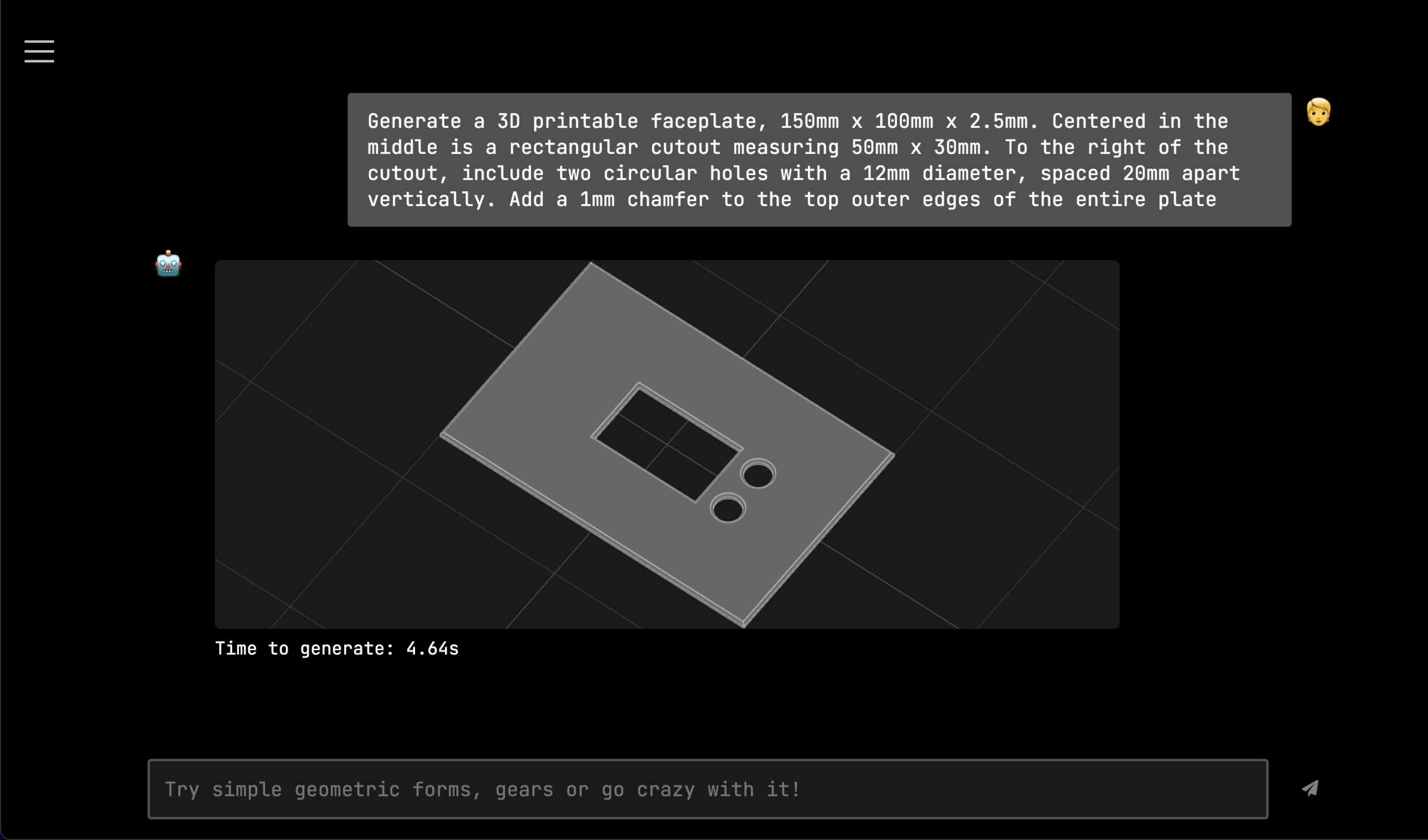
There are several text-to-CAD solutions online, like ZooDev, AdamCAD, Build123d, etc. As far as I know, we all have the same kind of structure for creating 3D models. You’re putting whatever you need down in writing, as you do with LLMs. You specify the dimensions, and get a model in return.
Can you explain the technical approach?
You give the LLM a prompt, let’s say ‘”Create a box.” This will get translated into a query language used to actually create the STEP file. Some of the solutions out there have developed their own query languages, others use available ones. But the goal is the same – get written instructions into code that is then used to create the models.
What complexity level can you handle today?
If you know CAD, CAD is quicker and offers a lot more functionality. If you don’t, we can help get some simple parts out.
We are already thinking one year down the line, where CADs like Onshape should have Co-Pilots as a chat window right there in the software, which is where we want to be as well. And users can just say “I need to add this kind of part”, and the CAD will do it for you.
Or you can ask the Co-Pilot to check a part. It could then say “you can slim down this part by 2 mm to make it lighter without losing any functionality.”
Down the line, we will be also able to create much more complex parts.
Each Month Brings Hundreds to Test
Do you have paying customers?
We do, but there are still very few of them. The free version has a less capable LLM since it costs pennies. The paid version at €4.99/month has a much bigger, more intelligent model, and you can toggle on thinking models. The answer is more refined and usually works better. You also get pretty much unlimited messages.
How many users do you have?
A rough estimate would be a little over a thousand monthly signups that want to try us out. Mainly students want to give it a go. I’ve seen a lot from engineering universities. And some companies too.
The traffic has been good although we don’t do advertising. It’s just organic traffic. It’s more difficult to retain customers and users as we are still so early.
What are people using CADscribe for?
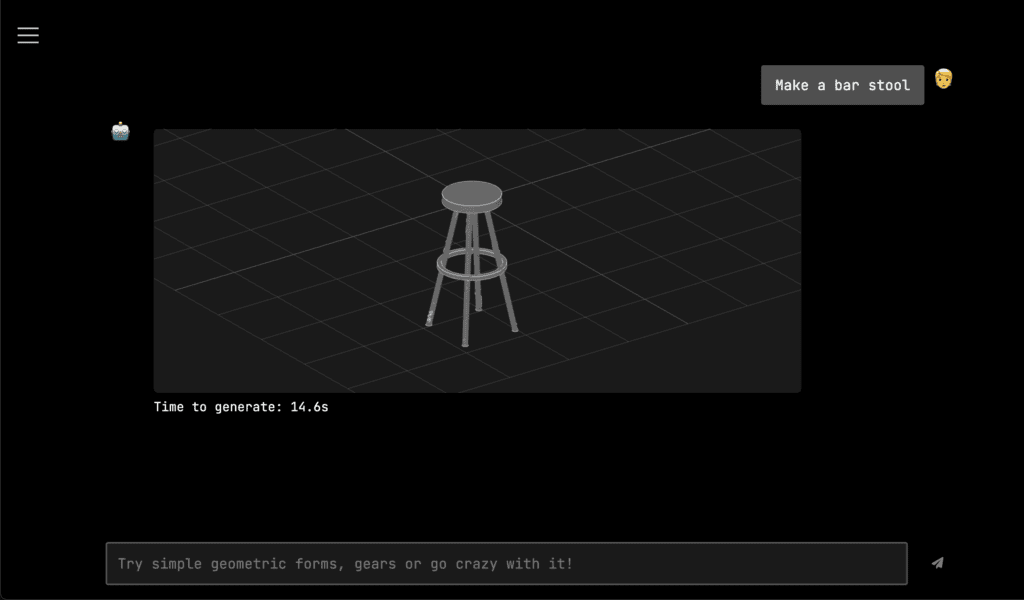
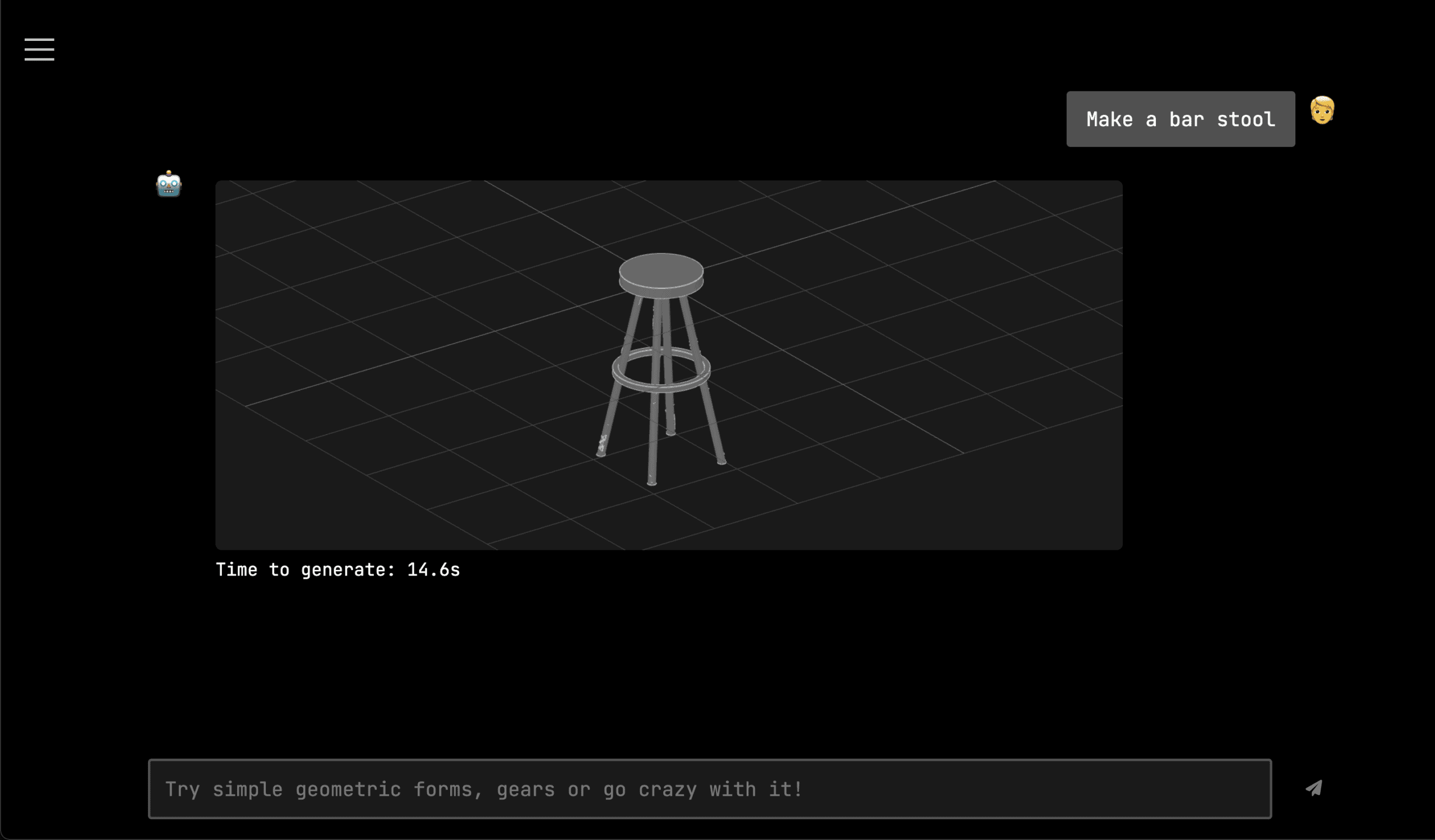
The main things are little household objects like pen holders, soap holders, bases. Mainly household objects. Some try more engineering-related parts like “make me hexagonal bolts” or “do this L-shaped flange”.
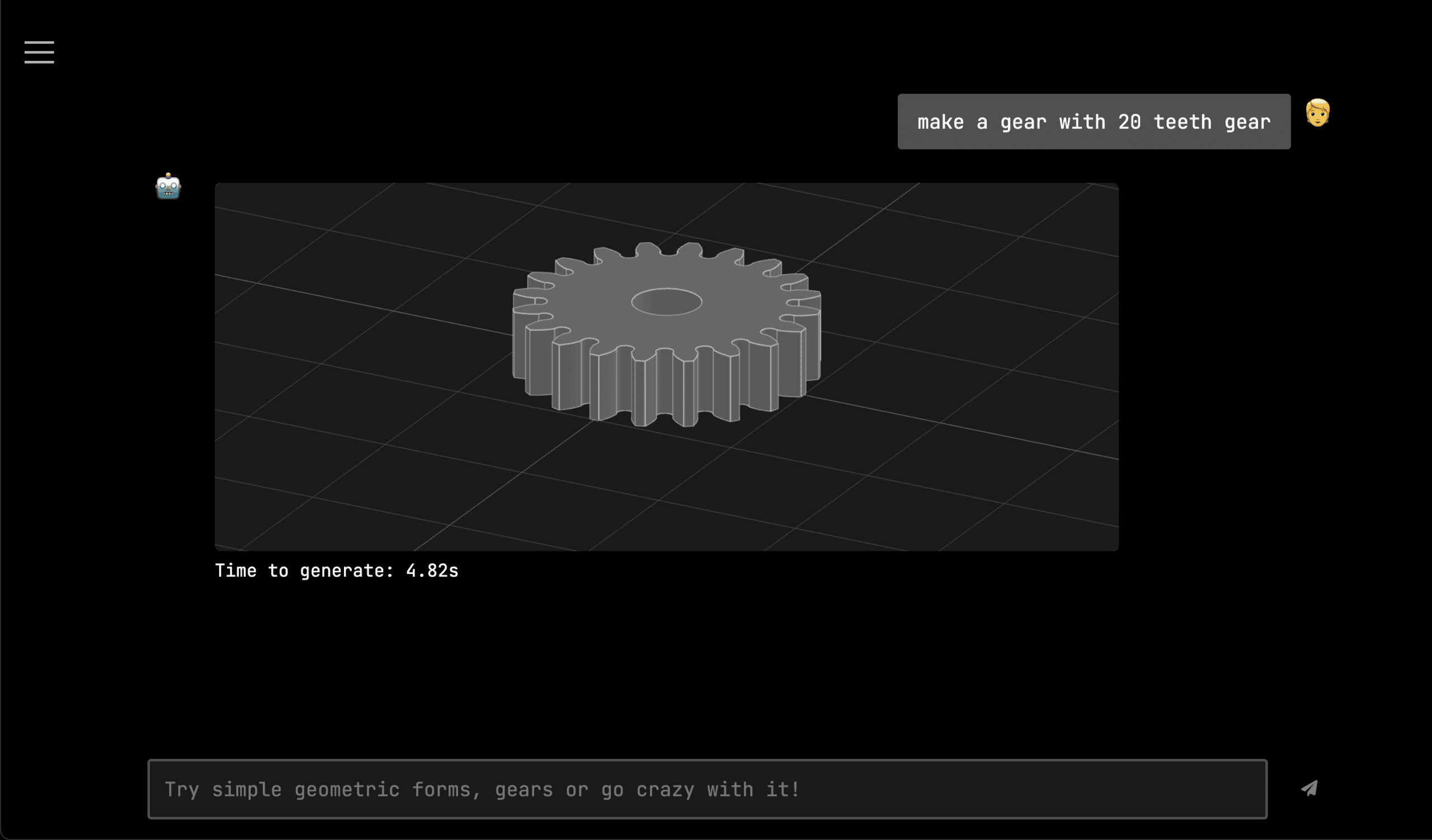
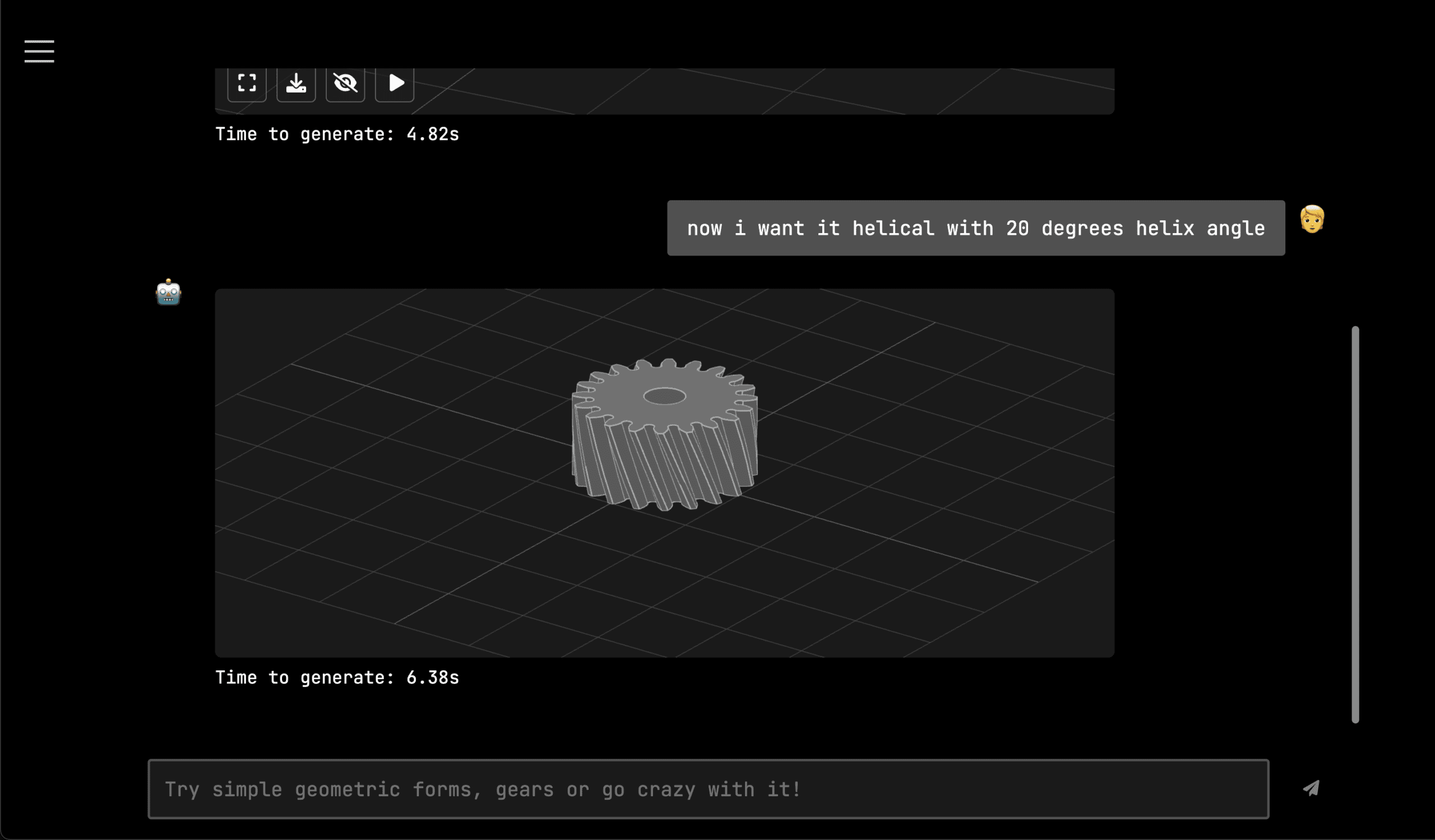
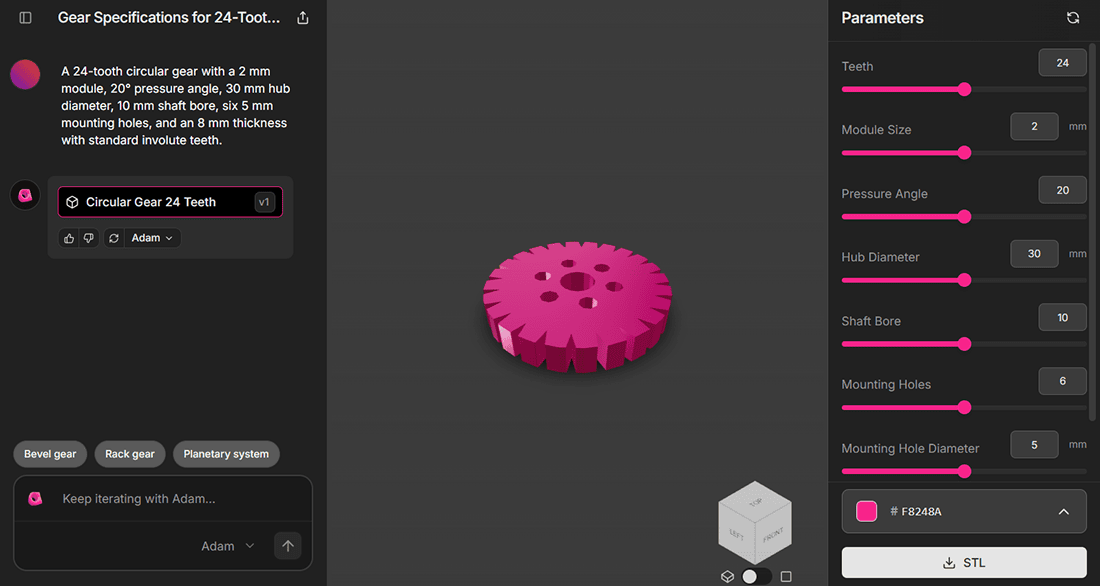
With more complex things it doesn’t work yet. I’ve added a library to make gears. If you ask for a 20-teeth gear, it usually does it.
What feedback are you getting?
On the positive side, users like the simple interface and the fact that you can iterate through the part. A lot of other text-to-CAD tools don’t let you iterate on the design, so you only have a single shot. But it probably never gets it in one shot, so iterating, talking through the design is a cool idea people need and like. The other thing is we generate quite fast, usually sub-5 to sub-10 seconds, while other tools take more time.
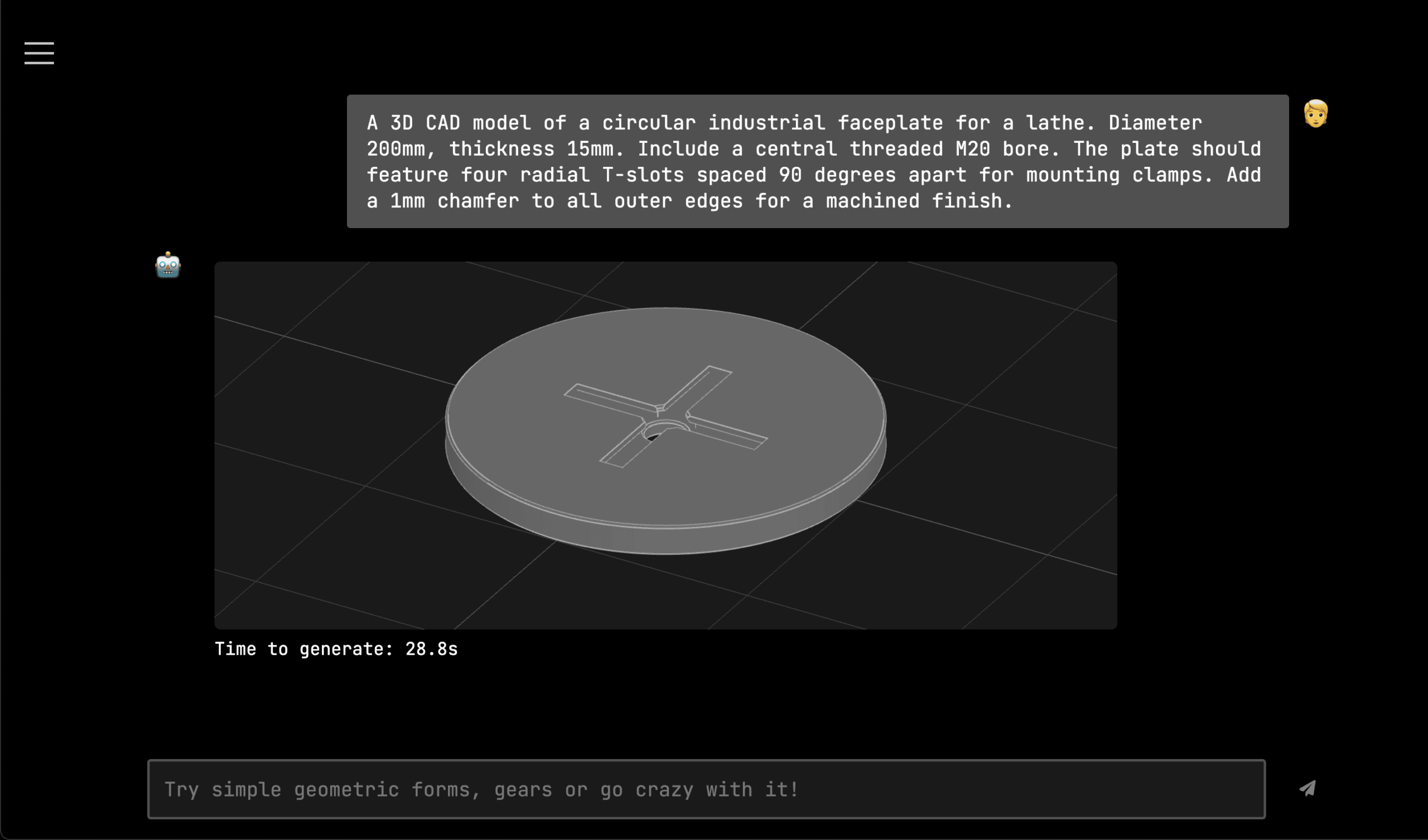
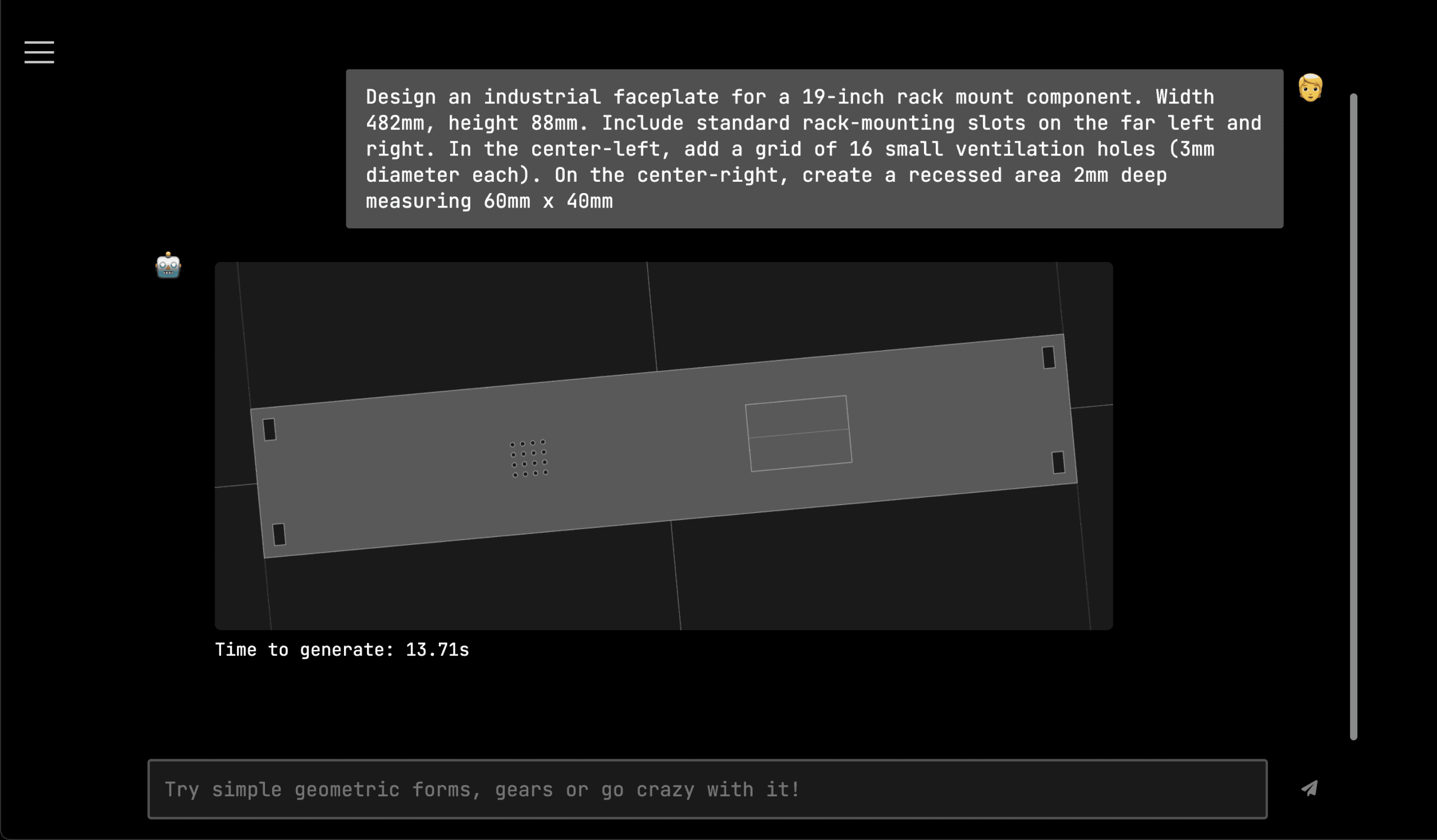
On the negative side, the quality of output is still not great. We need to make it better to deliver value. They’re not happy with how the models turn out, and it’s totally understandable. This applies to all text-to-CAD models right now. You can work on it and give the LLM as much context as possible but it’s very hard to get it right. But the fast advancements of LLMs like OpenAI, Anthropic and others will build better CAD generation capabilities too.
Iteration Must Be Possible
What makes you stand out from other text-to-CAD solutions?
The main thing is the iterative nature of CADscribe. You can change the model and go back and forth with the chatbot. I think all the other text-to-CAD tools will adopt this at some point because it’s just that much more useful. And the fast generation of the CAD.
Where is the market pushing you?
Unfortunately, the market pushes you to where the money is. While we love the hobbyist communities, they do not have that much money to spend. Students have pretty much zero money to spend.
If you want to build a company, especially in this space, you have to target other companies and sell to engineers. This means integration with the main CAD software like AutoCAD, Dassault Systèmes, Onshape. All of them will have some kind of integration, either proprietary or from third parties. Or if nobody accepts your integration, you have to build your own CAD editor.
Why build a new CAD instead of just integrating with existing ones?
It’s a business-driven decision. First, you want something that is really AI-first. I use code editors like VS Code. There are companies building integrations to VS Code, and there are companies building from scratch with a totally different way of thinking, like Cursor.
If you do it from scratch and think with the AI approach, you’re building something totally different from CAD editors right now, and it could be much more useful. On the other hand, if you do integrations, which is easier, you’re constrained by the CAD software, both technical and business limitations. If they decide to stop the integration, you’re done.
AI-First CAD Is the Destination
What’s your vision for CADscribe in one year?
First is to build an API. We’re already talking to people who want to use this tool programmatically. Within the year we’re thinking of adding new functionalities like sliders to modify dimensions, a more easy-to-navigate interface, add more user-friendly features.
And longer term?
The two ways are either build your own AI-first CAD editor which is more exciting, more difficult, more rewarding. Or integrate with partners and have CADscribe inside other tools like AutoCAD. The proprietary CAD software tool is more exciting but much harder.
What’s the limit of text-to-CAD?
It’s a very similar problem to code. Right now, if you ask an LLM to create a part or code a script, and it doesn’t have all the context you do, it will do 70% of the job correctly. Then you need to tweak parts you didn’t specify well or the LLM didn’t get right. One year ago it was 30%. The residual part is decreasing at an exponential rate.
The limitations right now are context. It just doesn’t know what you’re thinking. Want to build a part that connects to another part? That’s very difficult because the LLM needs the context of the first part. Complexity builds up quickly in assemblies.
And CAD generation is very embedded in the physical world. You need to create things that turn into reality. With code, the code is the reality the LLM creates. When you create CAD, the part needs to be printed and work in an assembly. That’s a limitation. My bet is it will be overcome in 2 years.
Related Topics
 Contact VED
 4
8
4
8




Comment(0)