

 Europe
  Türkiye
  United Kingdom
  Global





 Login with my Xometry account


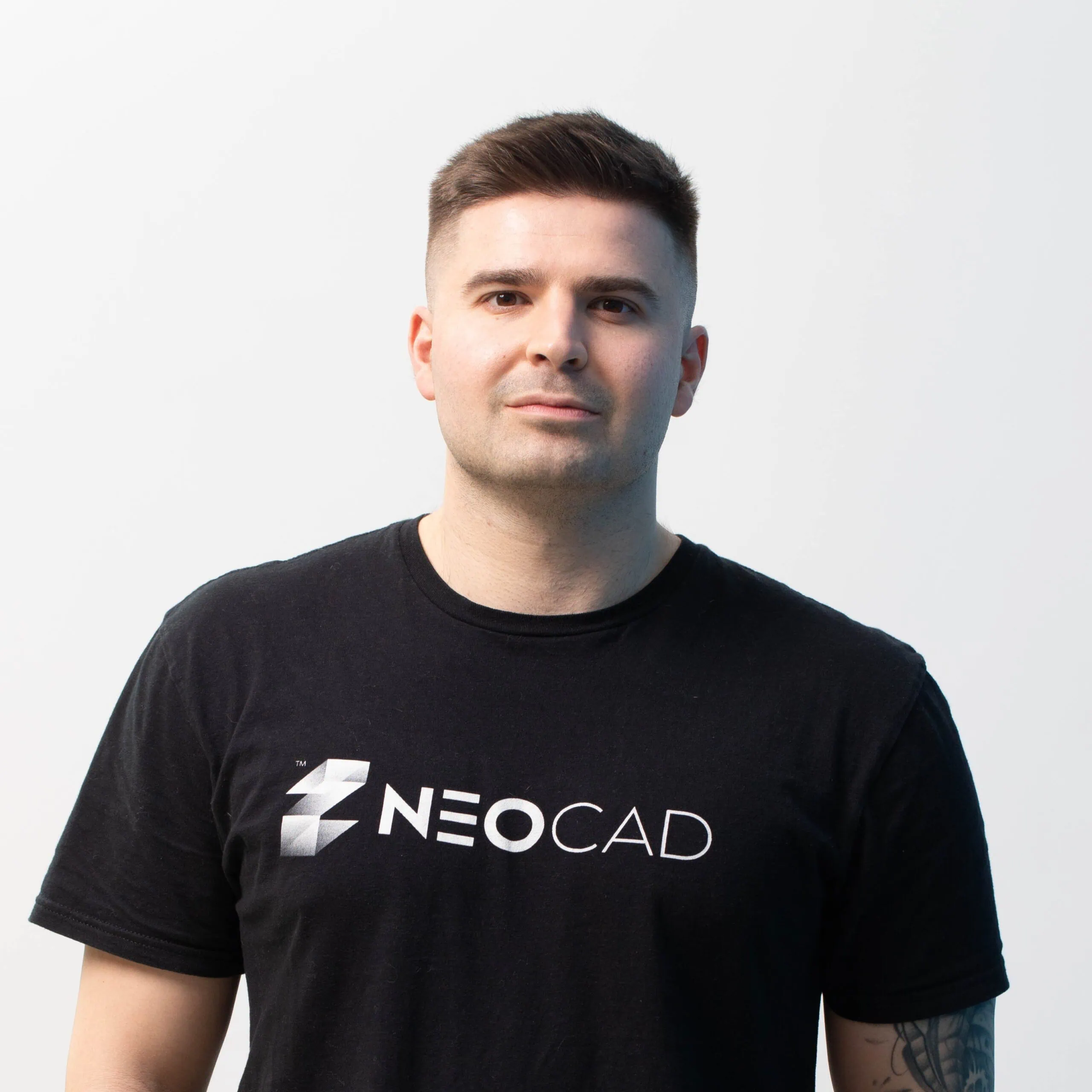

Our conversation with Luca Licciulli, CEO and co-founder of NEOCAD, covered what the platform does, how it fits into a company’s existing CAD and PLM setup, who it’s built for, and where the technology goes from here.
No Way to Find the Right Files
What is the problem you set out to solve?
For four or five years I worked with manufacturing companies through my previous company, VRtualize, a software house focused on AI and immersive technologies that I started in 2021. Working directly with engineers and technical teams, we kept seeing the same thing. Mechanical engineering is full of repetitive, low-value tasks.
In most manufacturing companies, especially in the European market we focus on, engineers spend a lot of time searching for and retrieving old information from the company’s own knowledge base. Software like CAD and PLM really do not help these engineers find old files, check technical documentation, compare revisions, or understand constraints. Every time an engineer builds something from scratch, the low-value task is the search for the information and files they need before they can even start the actual drawing.
Simply put, the issue is that a lot of those companies have an incredible amount of know-how that is frustratingly difficult to use.
The knowledge is there but companies can’t reach it.
Yeah, they have the data, they have the knowledge. But in mechanical engineering, and in engineering and manufacturing in general, legacy software has always been very closed. In Europe, most CAD software is still not in the cloud, it is still local, inside the companies, because they are very scared of sharing their data, and it has been like this for 20 years now. So even for new tools it was very difficult to access this data and build new solutions, and there were very few of them.
With generative AI we finally have the possibility of building an orchestrator that understands native 3D models and all the technical know-how of the company, and speeds up the whole process for an engineer starting a new CAD project.
Has anyone you have spoken to actually put a number on efficiency loss?
Yeah, about 40% of the time is wasted. It varies from industry to industry, because each one has a different process, but where we focus, in automotive and automation, 40% of the time goes into making duplicates and searching for files.
Another thing that happens often is that they find a file that is similar to what they want to make, but it is not actually the perfect fit for their requirements. What AI brings to the table is that you stop searching by file names and part codes and start searching by what the part actually does. When the tool finds a model by its geometry and function instead of by whatever is written in the PLM description, that is where the difference comes from.
How did companies try to solve this before AI?
It differs from company to company. The first problem is that PLMs are not enough to centralize the 3D part, and then all the other technical documents sit in various software, or even, like you said, on paper. Before AI, the reference player was Cadenas, founded in 1992. PARTsolutions covers standard, supplier, and company parts with geometric similarity search, and it works, but it’s a pre-AI approach: you classify and tag parts upfront, and you search by attributes. What changes with LLMs is searching by what a part actually does, in natural language, without that upfront work with enormous benefits for the engineer
AI has only made this accessible in the last couple of years, and now everyone is trying to build their own AI for CAD. The main issue at the moment is the maturity of the generative AI models behind our product and our competitors’ products, because in other fields you can achieve great results with some mistakes, but precision in mechanical engineering is necessary. Even the smallest mistake can make your tool useless.
An Intelligent Layer on Top of CAD and PLM
What is NEOCAD?
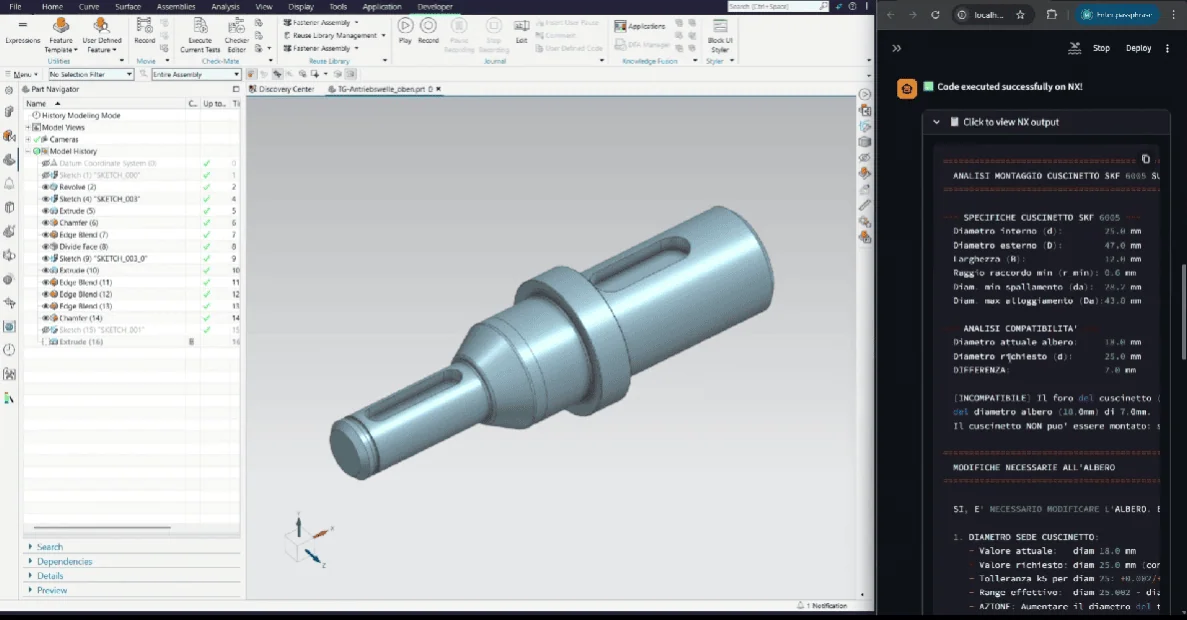
We are an AI platform for mechanical engineers. You can think of us as an intelligent layer on top of CAD and PLM systems that centralizes technical documentation and, above all, the 3D models of manufacturing companies. Our goal is to help engineers search, understand, reuse, and eventually generate or modify CAD models using AI.

Where does the documentation live, and what formats can you process?
We have built connectors for five of the main CAD packages, including NX, Inventor, and SolidWorks, plus the main PLM systems like Teamcenter and Windchill. We are able to read native 3D files, 2D drawings and PDFs. The difference is in how we handle 3D models. We install our software on the client’s own systems and make their entire model archive readable by AI very quickly. That part is patent pending, so it is as much as I can say about it.
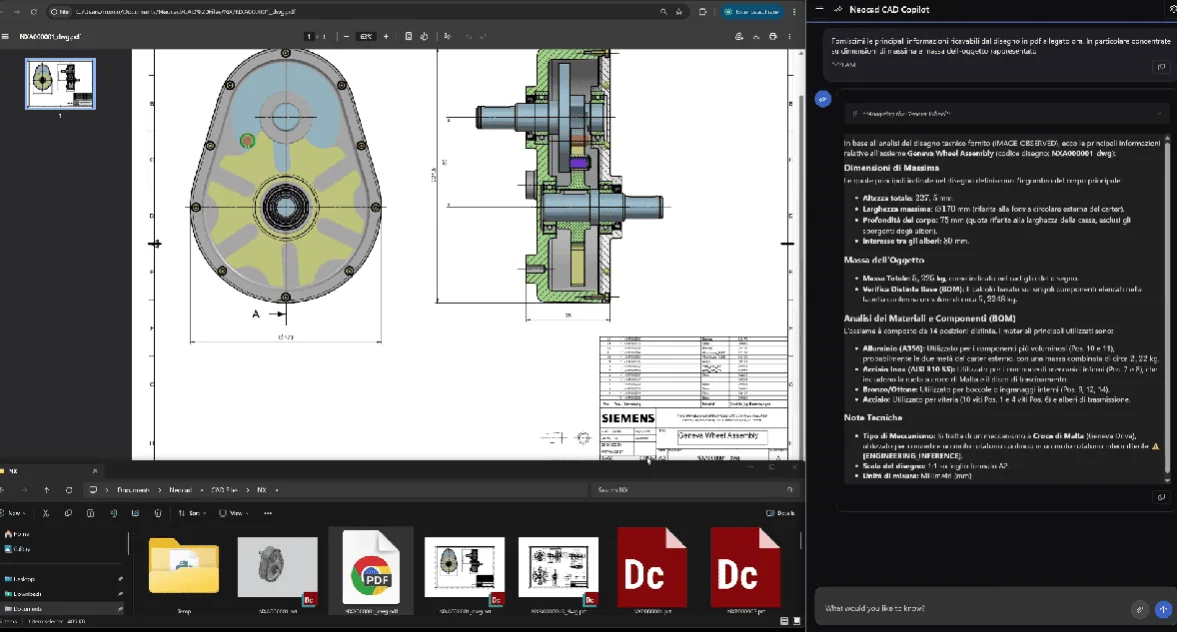
Say I search for a specific shaft. How can it tell one apart from a thousand similar shafts?
Within a 3D model there are several factors you have to take into consideration. You have the dimensions, the geometry, the description inside the PLM, and the feature tree, which is how the part was built. When you are able to read all four, you can differentiate a model by construction method, by actual dimensions, and by actual geometry. With that, if you use AI properly, you can select the right shaft among thousands of similar shafts in a database.
Will it return one shaft or a shortlist to choose from?
It returns the most similar, so it can be one or several. If you do not find exactly what you are searching for but something similar exists, the tool will surface that.
You also mentioned creating new parts. Is that already usable, or still on the roadmap?
It’s in the works. We’re running pilots on model generation with large industrial clients, but it’s not where we put most of our energy. The generative AI models are advancing fast on this front, that’s a wave we’ll ride, not a race we want to run ourselves. Our edge is somewhere else – making the company’s existing know-how usable. Once that foundation is there, generation becomes a feature, not the product
We actually expected that Claude or GPT would come out with a connector for Fusion at some point, and that has now happened. We know we cannot compete with these players , so it is better to follow the evolution of these models and differentiate ourselves by focusing on what manufacturing companies need right now.
What level of complexity are you targeting for the generator?
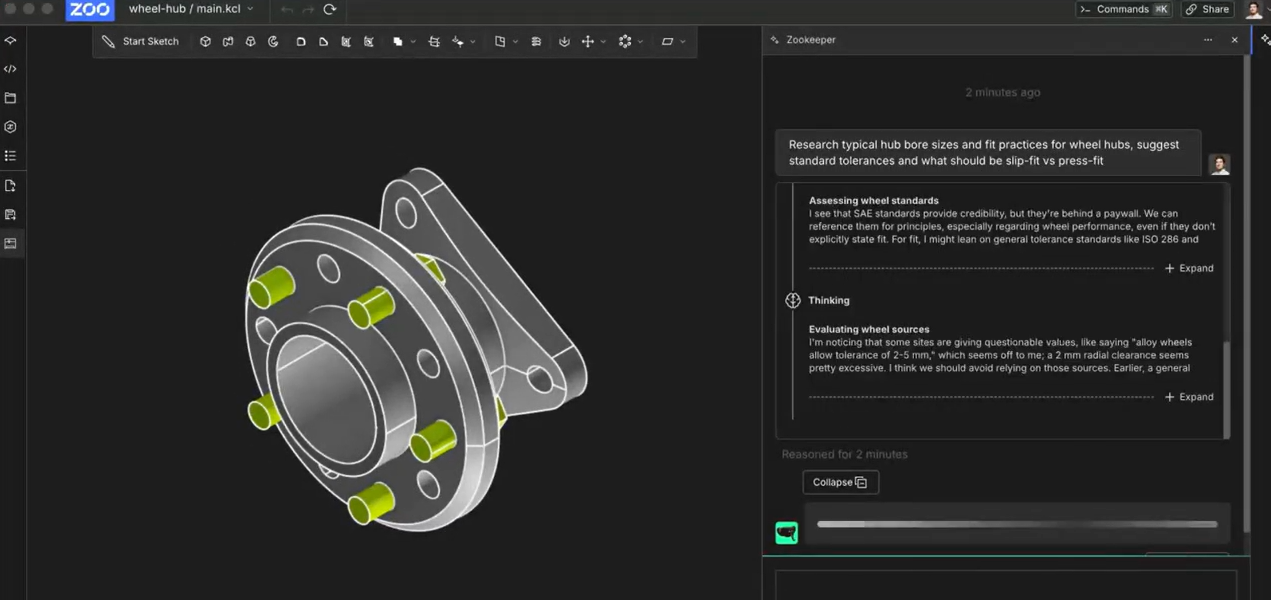
Generative models, and I’m not talking about us only, will be able to take on even complex assemblies. I am not sure how far away it is exactly, but the progress is exponential. When we started with text-to-CAD a year and a half ago compared to now, the evolution was incredible. The technology is maturing enough to work on complex assemblies and to be enterprise-driven.
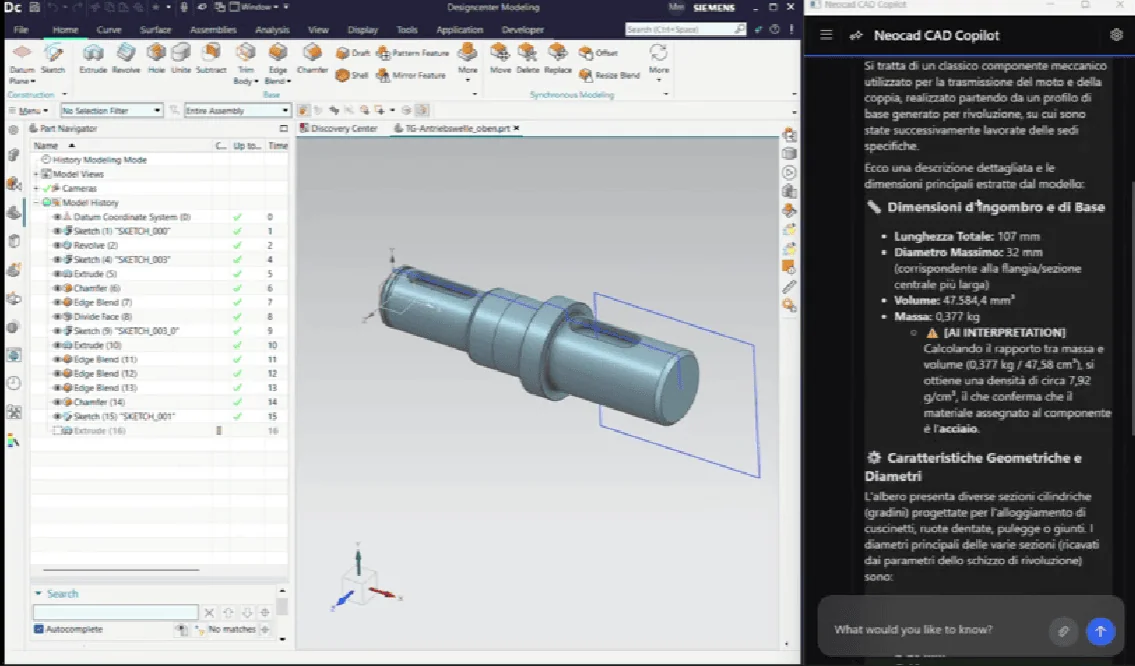
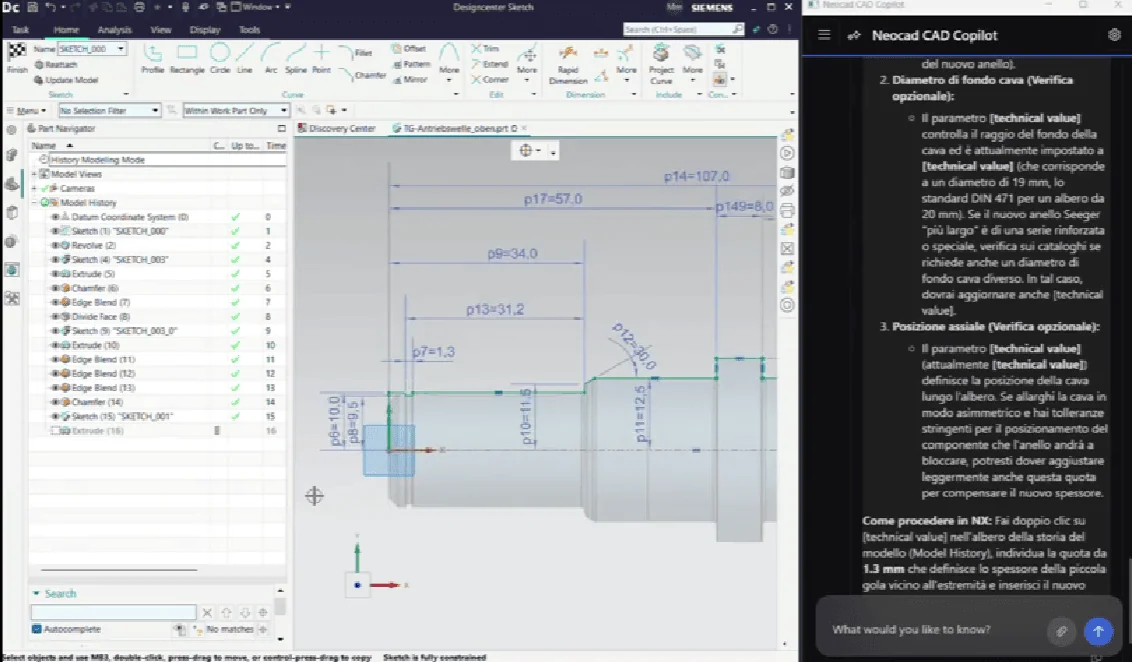
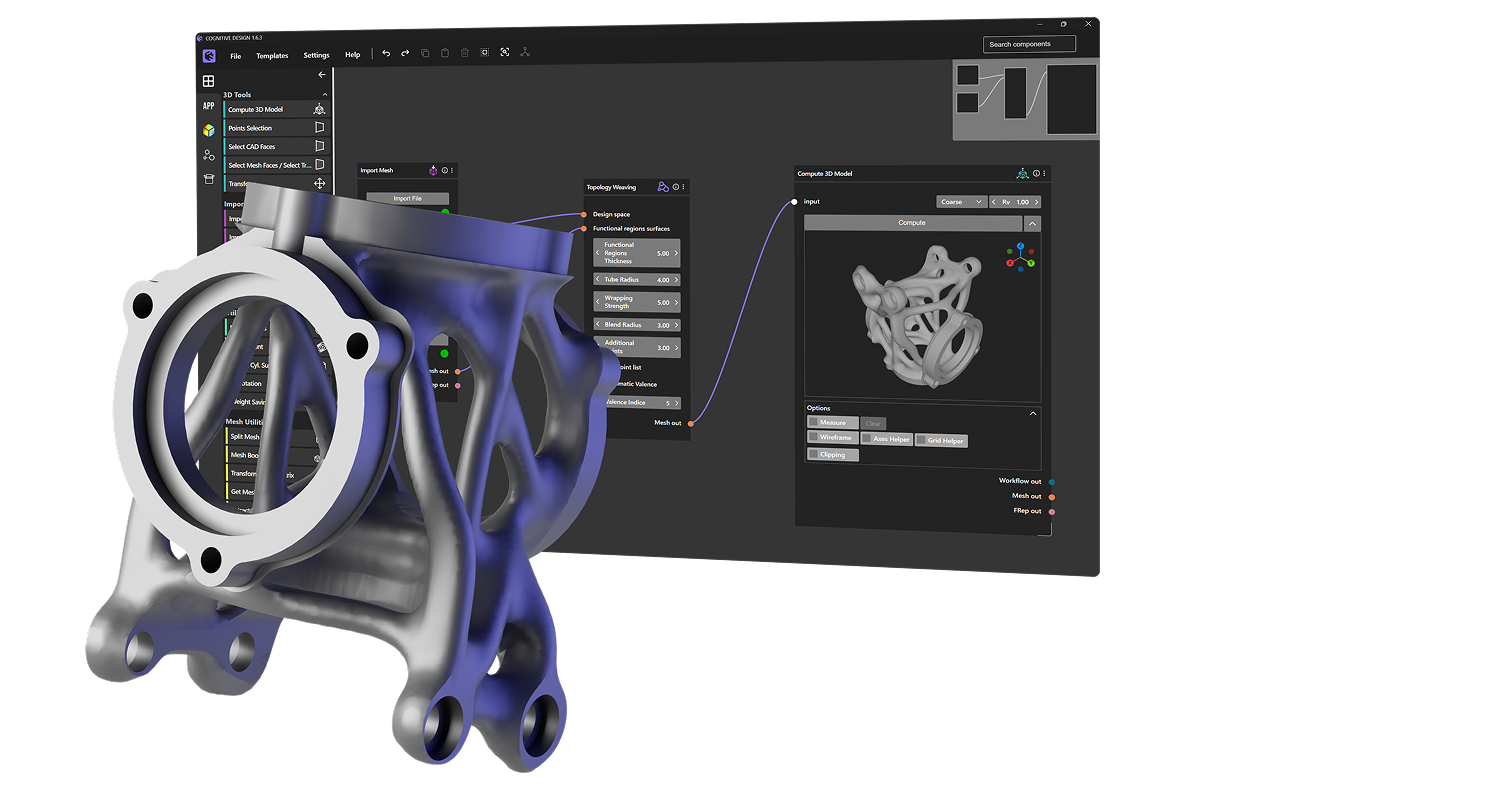
But I do not think the real difference is generating models. Once you handle the first problem – centralizing the know-how – the real winner is the player that provides know-how centralization while building an orchestrator across different tools. Not just CAD software, but simulation, CAM, and so on. The more adaptable that tool is to a company, the better, because if you look at 1,000 manufacturing companies in Italy of the same size, they all use the same tools but run completely different processes. An adaptive orchestrator that handles multiple tools while centralizing the knowledge base is what engineers will actually need. When I think about AI for engineering, I see an orchestrator, not something that works only on CAD.
Built for SMEs
Your clients are mainly in automotive and automation. What problem first brought them to you?
It is actually different in each case. With automotive companies the knowledge-centralization need came later. They are very big and want to accelerate even the smallest step in a process, so they came to us, for example, to speed up finding a mistake inside an assembly, where there are a lot of standard parts.
In automation we worked with several small and medium enterprises, and there we immediately recognized the knowledge-base problem I described earlier. The problem stays the same up to medium-large companies. When you start working with multinationals and corporates you address other problems, and the work becomes more custom.
Who actually needs this? A two-person shop has so little data, and each project is basically new.
It is surely not for startups at the moment, but it is not really a matter of company size but rather database size. It is for mature companies that have a lot of knowledge in their databases. We built the tool specifically for the Italian and German markets, which we know very well, and Italy is full of small and medium enterprises, especially in manufacturing. Everything here is an SME. But the problem is the same for medium and large companies. Sometimes a corporation has bought several small companies and is trying to centralize their knowledge bases, and the same problem comes up. With big multinationals it is a little different, and the way you work with them is more custom. But the tool was built for small and medium companies.
Who signs the contract, and who opens the tool every morning?
Usually it is the technical director who requests the tool, because he has the overview of the company’s knowledge base and technical documentation, so he signs the contract, after a lot of due diligence from IT.
But the first user is not him, it is the junior mechanical engineer, especially the one who came in two weeks ago and does not know anything about the company yet. There is a lot of turnover in these companies, and they have been looking for ways to transfer their knowledge base for a while because of it. The second factor is that seniors are very few and very busy, so if you can free them up a little, they can focus on innovation and other parts of their work.
What has been the most surprising thing customers have come back and told you?
What surprised us most was CAD intelligence, the ability to read 3D models natively, and we actually discovered it through our clients. We had built the platform on top of their CAD to centralize the company’s know-how, and it was already doing its job, finding the right 3D models across their databases and PLMs. Then one client called and said, “I found the part, but I also understood how it was built and which component would fit best with it.”
We had not expected that, because we were focused only on finding the right component or assembly. The surprise was that the tool could support an engineer during the modeling itself, not just the search. It happens when you give the model the right context, and that is exactly what we are trying to give mechanical engineers and LLMs. It is not easy. If you have been a mechanical engineer, you know how closed these systems are.
Pricing and On-Premise Deployment
What does it cost?
We have a fixed price for licenses, both personal and floating, plus a setup fee during installation that really differs depending on what is inside the company.
Does the price come down to the amount of data, or the form it is in?
The amount of data, especially 3D models, mostly affects the time spent on installation, so the price reflects that. But the part that takes the most time is analyzing how the technical documentation was prepared and where it is, because most of the time the company does not know where it is and we have to find it with them.
These companies have been struggling with their knowledge databases for 20 or 30 years. In Italy you find companies with 40 years of 2D and 3D modeling inside them that are trying to improve. It is not easy, but when you do it properly you can see the difference compared to a simple LLM connected to your Fusion.
CAD IP leaving the building is one of the big fears. Can NEOCAD run on premise?
The tool is on premise. The only part that usually sits on the client’s cloud is the AI. We use commercial LLMs, and we do not hide that. We have looked into running open-source models directly on their machines, but as a startup with a team of 10, we do not yet have the resources to manage local models inside each company.
Most small and medium enterprises are fine letting our system in as long as it stays on premise, and we never train our models on their data. On premise is not the right fit for everyone, but managing open-source models is not feasible for us yet, and going that route would also cost us the advantage of commercial models, which improve dramatically every couple of months.
What does deployment look like, from the day I say yes to having it installed and ready to go?
First we ask what your systems are, your CAD software, your PLM if you have one, because not every company does, and you would be surprised about that, and your ERP if you keep technical documentation there. We speak with the IT department to get the access we need. Then installing the tool and centralizing the knowledge base takes about two weeks to a month, depending on the size of the installation. After about a month you have your NEOCAD chatbot running on your machine.
European Leaders in Engineering AI
Some players focus on CAD part generation, others on the knowledge base. What is NEOCAD’s path to winning?
Being an orchestrator and not a fixed tool. These companies have kept their CAD software for 30 years without changing it, just because they know how difficult it is to change. So we are building on top of those existing systems rather than looking to replace anything. Most of our competitors share that orchestrator strategy, but they focus on different things, like CAD part generation or CAD and CAM together.
You plan to stay in Milan while most of your peers are in the US. Why stay?
Funding in Italy and Europe is harder than in the US, so the resources here are a little different. But the cool part is that Italy is the second-biggest manufacturing market in Europe, just behind Germany, and you have Germany right next door, where we already work.
Our vision is to become the European leader of AI for engineering, and to do that we have to win two markets, Italy and Germany. And because manufacturing companies in Europe are so closed and so scared of letting their data go, if you can execute and build traction here fast, it is very difficult for US players to come in without a presence on the territory.
Does being European change how you build the product itself?
Yeah, surely. I was in San Francisco in November and talked to some manufacturing representatives, and from the first second I could see that the need may be the same, but the processes are really different. In the US, cloud is much more accepted, while in Europe everyone is on premise. That is part of why some of our competitors moved to San Francisco, because building something that is already cloud-based is more scalable. But they are two completely different markets.
What will the engineering workflow look like in five to ten years when tools like NEOCAD are much more mature?
Over that horizon, which is a long time in our industry, you can imagine an orchestrator that starts by searching what you have already done and finishes by generating the model while you are doing something else. You will have agents doing the work while mechanical engineers control them, much like developers handle coding now. Some software houses already do almost no manual coding and have built huge workflows that handle everything. I think mechanical engineering will go the same way, a bit slower because of the factors we talked about, but eventually we will get there.
Some founders doubt AI will ever generate complex assemblies on its own and see it mainly as a tool for speeding up current processes. Where does that disagreement come from?
First, I am very optimistic, Andreas. It really depends on how far out you project the maturity of the technology. Over five to ten years, yes, I am pretty sure we will reach that stage. I do not see mechanical engineering without mechanical engineers, that will not happen, but I see tools that work end-to-end, taking the information, processing it, and eventually generating even complex assemblies.
The thing that will make the difference in our field specifically is how good we and the legacy players are at giving the AI the right context. Build native systems that can search, retrieve, process, and run calculations, the orchestrator, and we reach a stage where the technology handles even the hardest task. Never without a mechanical engineer supervising, but end-to-end.
Any other interesting AI companies in the engineering space you would highlight?
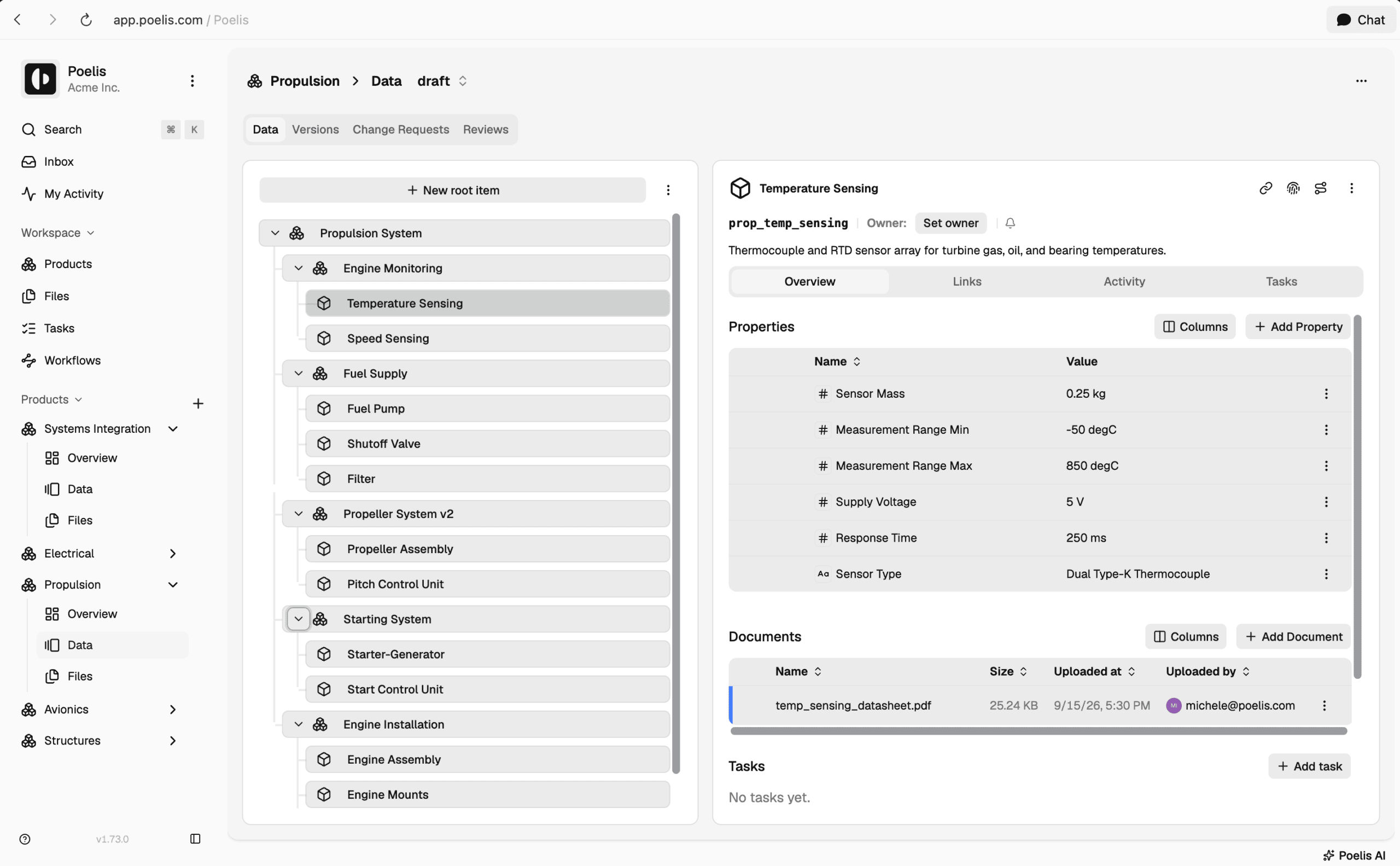
I think there are a few interesting ones out there. Poelis is another Italian AI company that is doing cool things for hardware engineering. Otherwise, you have already interviewed most of the exciting companies out there, ones like Mecagent, Bench, Getleo, Cadflip or P1-AI and companies working on 2D drawings like Draftaid. The drawings are a big pain and I can’t see them disappearing any time soon, at least not in the European market.
Related Topics
 theprintede electronics
 Uliana Krayneva
 0
8
0
8



Comment(0)