

 Europe
  Türkiye
  United Kingdom
  Global





 Login with my Xometry account




We sat down with Omar Fergani, CEO and co-founder of NEOFORGE to talk about why metal additive manufacturing is still stuck in trial and error, what physics-driven AI actually means, and how AMAIZE turns the traditional design-produce-test-learn cycle on its head.
The Enormous Cost of Failure
What is the problem in metal printing today?
Metal additive is a critical technology for some subdomains like space and defense. However, although the promise of metal AM is so huge, we don’t see it scaling and we are not seeing adoption all over the world as we thought we would be by now.
There are multiple problems. The most obvious one is that it is an expert-demanding industrial technology. Most people think it is like FDM. I buy a machine, I have a design, I push the button and I print. As a matter of fact, it requires a huge amount of expertise, and the only way to train those experts is to make them go through a lot of failures. But the cost of these failures can be pretty huge, considering the multi-million dollar machine time and production materials like titanium or Inconel. So there aren’t many companies that can afford such personnel training.
The second issue is that getting the prints right the first time, even with experienced operators, is difficult. When you fail many times, you are wasting time on an expensive machine, wasting expensive material, creating delays. That adds to the cost structure.
And the third is that the use cases that would benefit most from AM are not yet widely adopted.
Thermal FEA has been talked about as a solution for print success. What do you think about that?
Simulating instead of going to the machine and trying and failing is very smart. More simulation, less physical iteration is always very wise. But is finite element the answer? From my perspective, no.
Manufacturing is not an analysis job. Manufacturing engineers are never going to adopt finite element. It is very complex, adding another level of expertise. And the level at which the finite element needs to be used to solve manufacturing problems is on the toolpath. Simulating 2,000 miles of toolpath with finite element would take probably 24 million years of compute. So saying that FEA is the answer is just not realistic.
However, the good news is that with AI we moved from deterministic PDE solving to a probabilistic, statistical-based approach. With that we are able to do 2,000 miles in a few minutes. That is the opportunity that machine learning brought.
What made you and your co-founder Katharina start NEOFORGE?
Katharina and I have complementary backgrounds, she brings deep expertise in AI and physics-based modeling, I bring years of end-user and machine-OEM experience watching the same problems repeat across customers. That combination is the founding bet of the company.
We came together around a specific conviction: the additive manufacturing industry was trying to solve a fundamentally probabilistic problem with deterministic tools. Finite element methods, no matter how sophisticated, were never going to scale to the toolpath-level resolution that real production requires — the compute cost is prohibitive, and the user experience is wrong for manufacturing engineers who are not analysts.
What we saw, before anyone was talking seriously about AI for manufacturing, was that machine learning trained on physics-grade data could collapse the compute problem from years to minutes. That insight, that the right paradigm was probabilistic and learning-based, not deterministic and solver-based is what AMAIZE is built on. Founding the company was the only way to pursue it at the depth and speed it needed.
Simulations that Reveal Risks and Provide Solutions
What is AMAIZE?
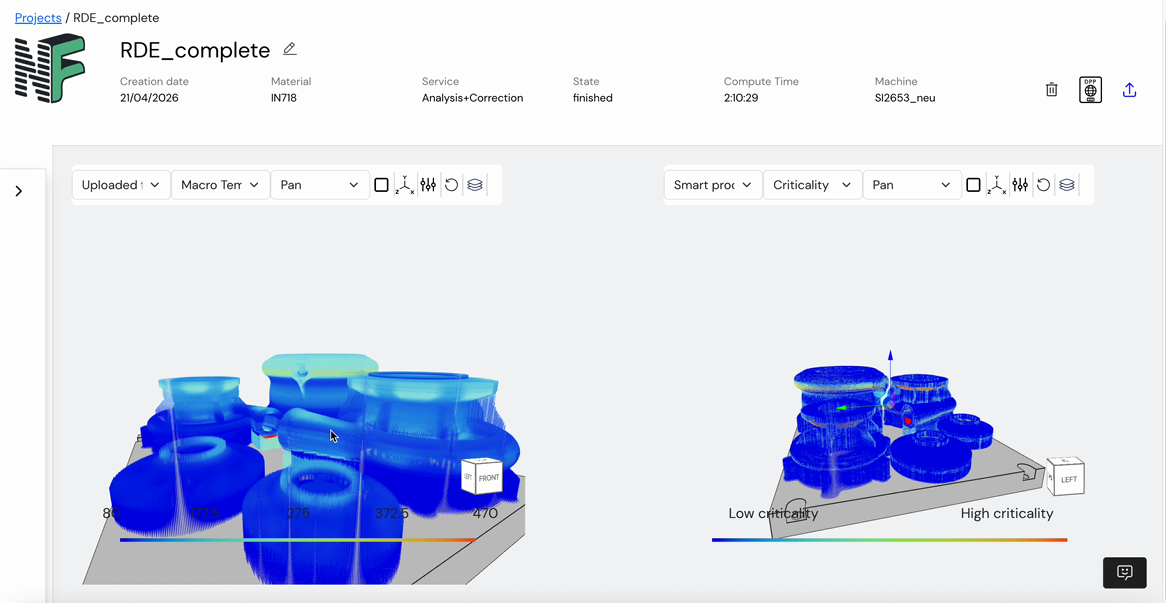
At the core of AMAIZE there is a foundational model that understands everything about laser-material interaction. We use this model for simulations. If you have a very large component that will take weeks of printing and the risk of failure is high, we will simulate that in a few minutes. We see where the risk of failure is, provide feedback to the designers, provide solutions to the manufacturing engineers so they can do all the learning upfront before even finishing the design and printing.

Think of it this way. The whole engineering production testing learning cycle has always gone the same way – design, production, testing, learning. We now have the possibility to bring the learning to the beginning. We tell engineers, don’t finish your design, don’t produce, just do as much learning as possible. It is possible now because it is computationally efficient. Once you have done all these digital iterations that are near-zero cost, you finish the design, produce, test in the physical world. That is the paradigm shift we bring.
And this is not just a digital technology swimming in the air. AMAIZE is the first technology in the world that was actually implemented in industrial-grade machines. Even more interestingly, we are the first company that actually drives the scanner, not just the machine. We integrated our AI in the laser scanner, SCANLAB for example. So it is a technology that goes from the design to the iteration to the execution on the machine.
So how does it actually work?
Whatever an expert would have done, the software will do now by running tons of simulations, nesting the part, putting the supports only where needed, optimizing the scan strategy to achieve the highest quality, the best surface finish, slicing and hatching to give you a G-code that is ready to be sent to the machine. Full end-to-end. The human sees what the technology is doing, can analyze it, can extract the data, can question it. But the reality is we are using compute to do the whole work.
Some of these objectives are competing, obviously. So we do multiple optimizations and show the customer different options represented by different G-codes. The software thinks that these three are most interesting because one optimizes for cost, another for quality, and a third for production time. It is your decision in the end which one you want to go with. And once you choose, you can literally just push the file and click “print” because we are integrated with your OEM.
What if my design just is not printable? What happens then?
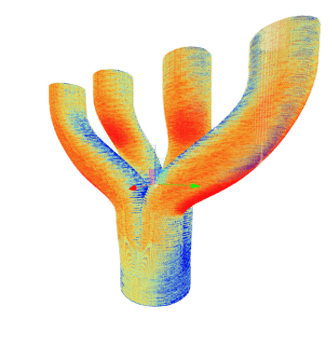
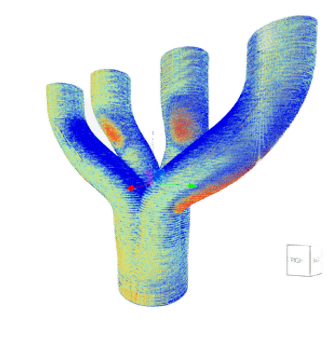
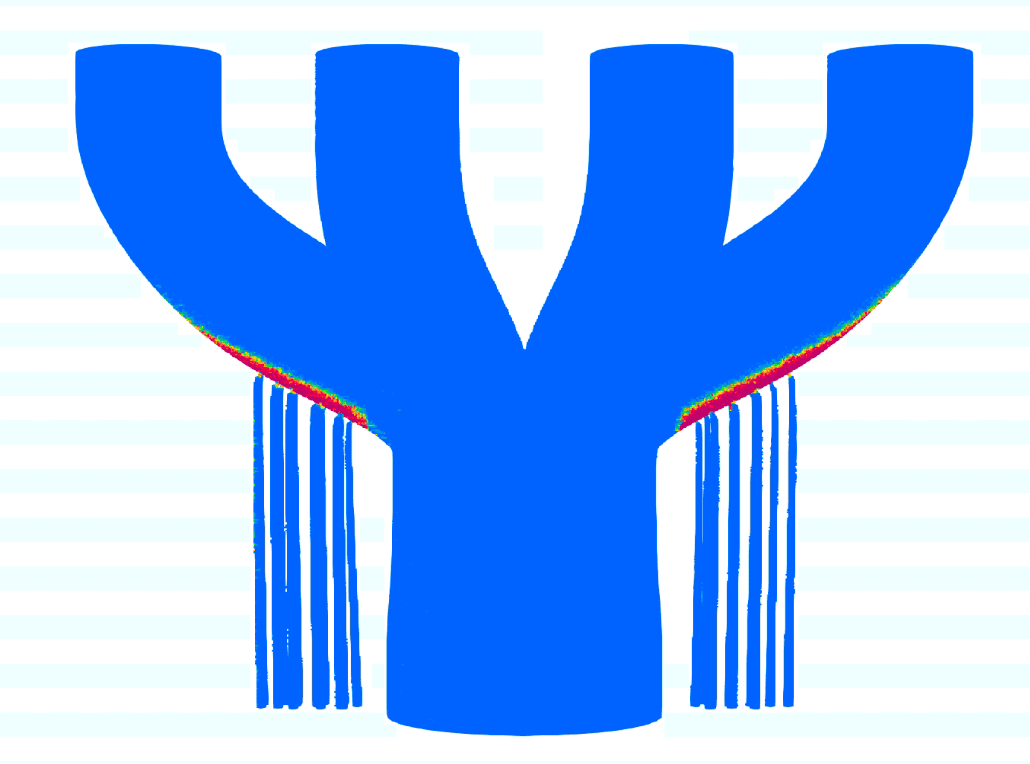
When you drop the file, we are not only providing you with the G-code. We show you the result of where we see the issues. So you as a designer can see your design in 3D as it is – where the high critical areas are, where even with our optimization we could not reduce risk.
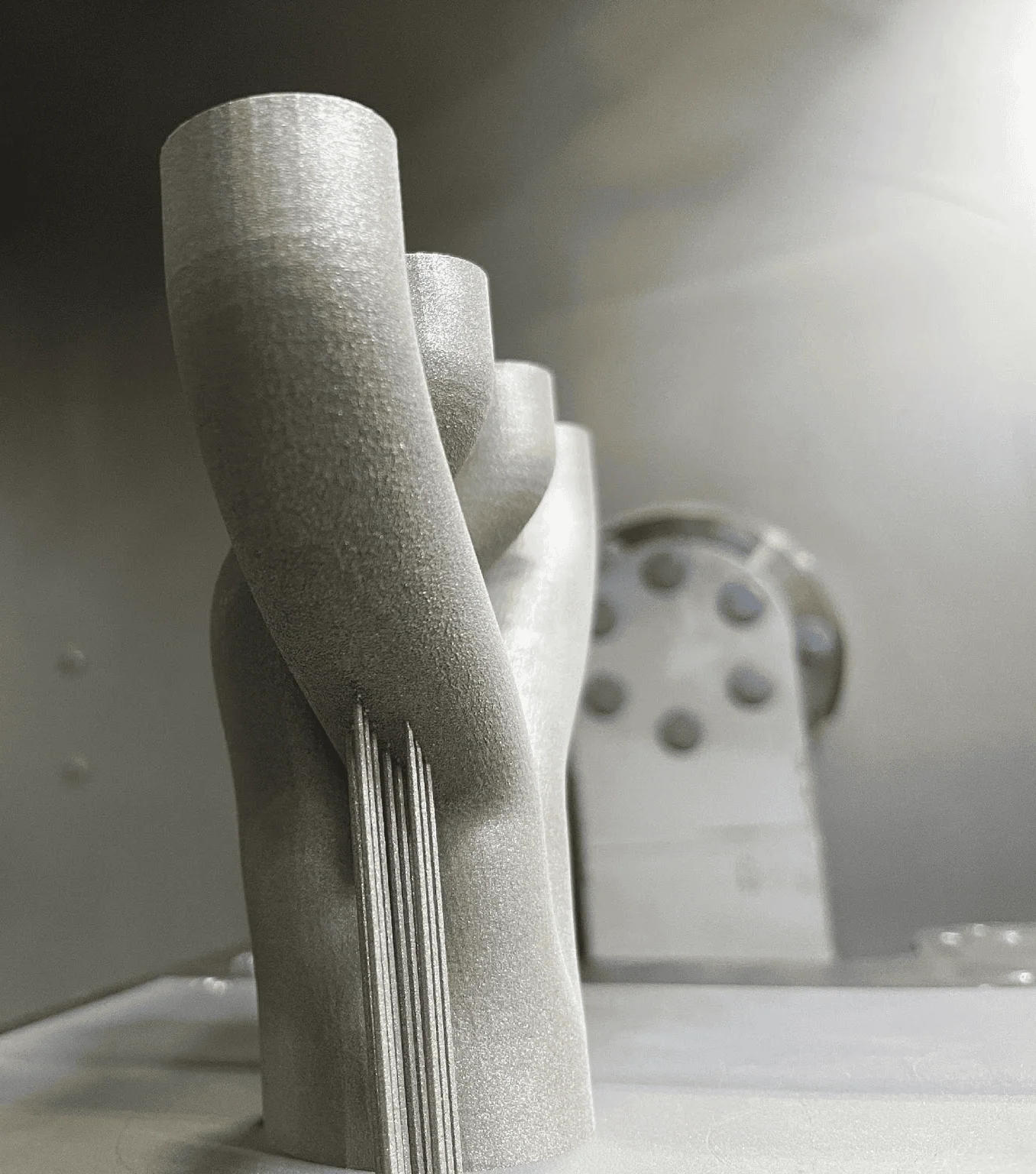
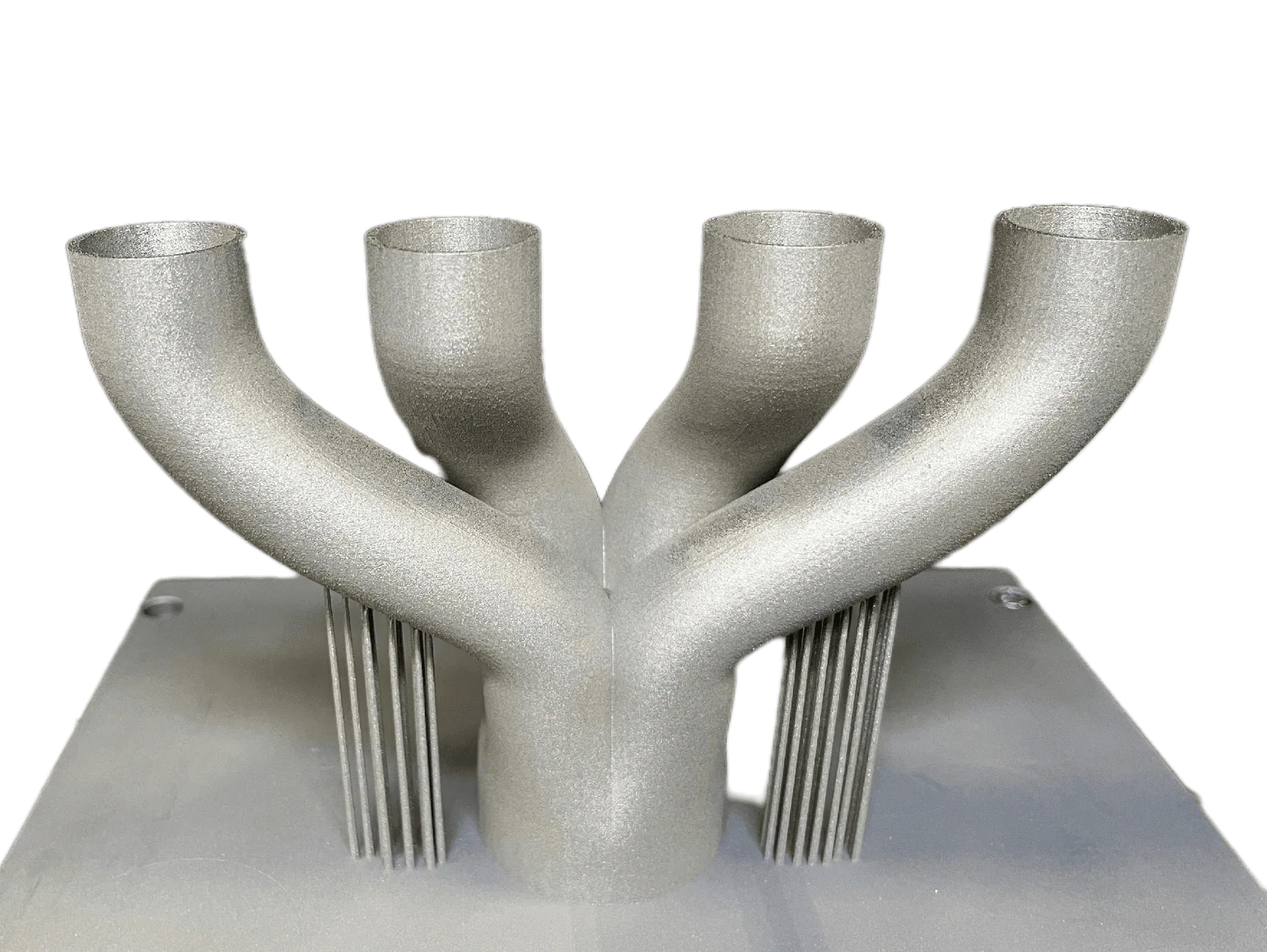
Think of a manifold. Imagine you are printing that. The zero-angle overhangs, no matter how much I optimize, are going to be very hot. The software will show you that you still have an issue in your design. That is the first benefit of our tool: design for manufacturing.
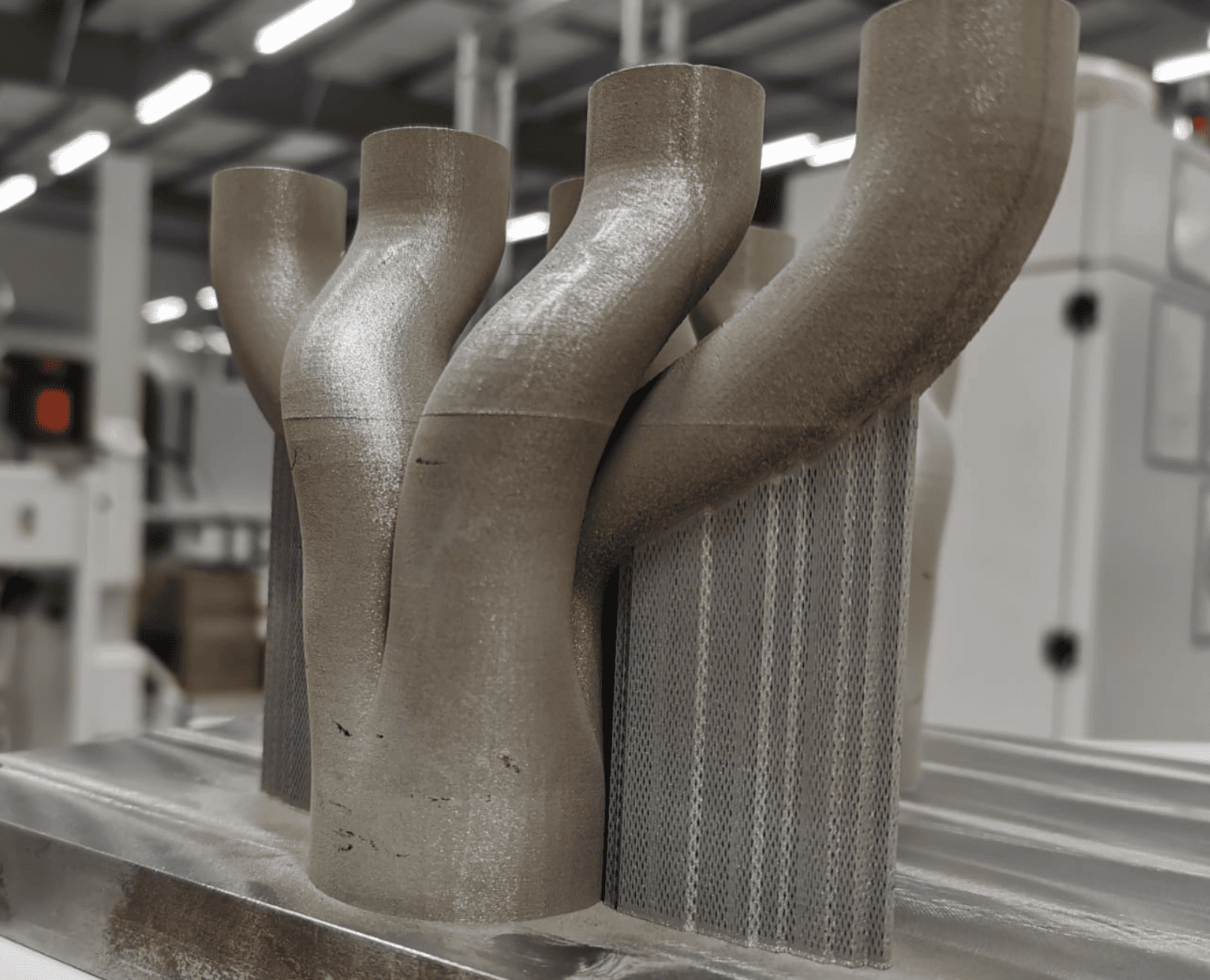
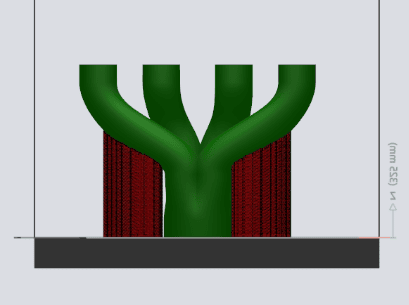
We show you where the issue is, we optimize it, it does not work, you need to work on your design. And here we saved you a lot of time and money because you did not go to the machine, you did not see the failure, you did not have to do monitoring. Near-zero dollar learning.
What does physics-driven AI mean?
In simple words, it means that there is an expert who knows the problem, builds a model, validates the model on a deterministic basis and gets a huge amount of compute to generate a lot of data around that domain. Then uses that data to train an AI. Our models are trained on high-quality, validated, numerically solved data points.
Companies use different machines and materials. How can you optimize the prints considering the differences in setups?
All these machines are using power for the laser and the movement is determined by the G-code. The only difference is in timing, power usage, and so on. Those are just varying boundary conditions that are taken into our model.
Depending on the size, the features of the machine, there are things that could change. Multiple lasers, faster or slower recoating, or a build plate that is heated or not. But those are just parameters for any model. We have access to all the APIs of all the machines, so we know the machine specifics and account for those.
Large OEMs Need Part Qualification
What types of companies is AMAIZE best suited for?
The hottest area where we are very active now, and where our return on investment is the highest, is large OEMs. I think the largest use case is where AM is also blocked to be adopted in high-end applications, which is qualification. How can I assure that my print recipe will achieve the best microstructure, best mechanical properties? How can I assure that I can repeat this consistently? Those are the projects where we see the highest value, and those are large OEMs building propulsion systems, turbopump assemblies, antennas.
There is also a growing segment in powder manufacturers. They understand clearly that the success of their customers buying their powder will not only depend on the cost, but also on partnering with someone like us who helps with the processability of their material. Think high-strength aluminum. You can print cubes and have high density, good quality. The moment you project those process parameters onto a complex geometry, you have cracking. The customer does not adopt the material. So they like to partner with us to offer their customers a complete solution.
What improvements are your customers seeing?
First, there are some categories of components that people could not do in the past, thanks to our technology it’s now possible to print impeller with very low overhang and thin wall structure. That is already a game changer. Thin-wall structures that are requiring tons of support, those are nightmares, no one wants to do them with additive, now you can.
The second thing is that your first rate of success dramatically increases and becomes constant. If you are a successful service bureau, you probably have some expert who knows something secret and you depend on that person to do some magic. With our technology, we helped make things becomes systematic. Every customer who moves from relying only on human expertise to using a systematic approach sees their first-time-right rate increase substantially without dependency on super users.
Obviously, that does not mean 100% first-time right. That does not exist. Sometimes the machine does not execute what the software prescribes, sometimes the recoater blade is destroyed. But systematically we see an increase of repeatability and success, also on components they could not do in the past. Economically the return is absolutely fantastic.
Do you have any interesting customer stories?
One that sticks with me, names aside, is a customer at the top end of the space industry. Not capital-constrained – tons of machines, the best operators, and they had already solved the thermal problem by hand. The trouble was the manual correction was sub-optimal, so the parts that mattered most were the slowest to make. At production volume that gets brutal. More parts means more machines, and at some point you run out of factory. They were facing a multi-million-dollar CAPEX cycle to expand.
They came to us to see whether AMAIZE could squeeze the thermal problem harder before they signed the build-out. By exploring a far larger design space than any operator can, AMAIZE materially increased throughput on the same hardware. The factory expansion came off the plan. The CAPEX bill went away.
Drop the File, Download the Result
What does AMAIZE cost?
We adapt the price to the customer usage and deployment setup. At the moment, AMAIZE is consumed as a service.
What does deployment look like?
AMAIZE is available in three formats.
First, we run the service for you. We just made it super easy for everyone. You give us your problem and we run it and send you a file. You do not need to worry about any training, any deployment.
Second is Saas for our vetted customers. So we created a workflow where we get the geometry, the material, we know their machine, we run it on our cloud in Europe, sovereign and secure, and send them the file. Go and print.
Thirdly, we have some specific customers who need on-premise deployment because of the constraints in defense, so we still do that in special cases.
So AMAIZE is more of a service at the moment?
You can look at it as a service, yes. It can be deployed as an API. Our customers get access to our software, drop the file and download the result. It is a SaaS but without you having to become an expert. The whole thing is fully automated. And if there is something non-automated, someone from our team will take care of that.
What information do you need to get started?
We need the material, the printer, the geometry, what you are optimizing for, and then we send you the results either as a finished component or the print recipe.
Government Programs Taking the Industry Further
You have talked about production machines no longer requiring human operators. How far away is that?
You have to look at this not as black or white but as a roadmap. When I started in the industry there was no such thing. You had to use deterministic software and do a lot of things manually. I have taken so many CAM courses but I never became really good. You need to break your neck to become good at that.
For additive, it is nearly done, at least from the computer workflow. The typical “I go to my computer, open it, do support, orient part, add this, change orientation”, that is already in the past. And if someone is still doing that, either they do not know that something else exists, which is fair, or they are sticking to the wrong approach. In factories today, in Europe especially, there is so much need for humans to do other tasks more important than orienting a part in a build processor.
Does that mean we manage everything on the machine hardware? No, the robotics need to take care of that. But the computer workflow, that is done. Over the last three years it went from nothing to deployment.
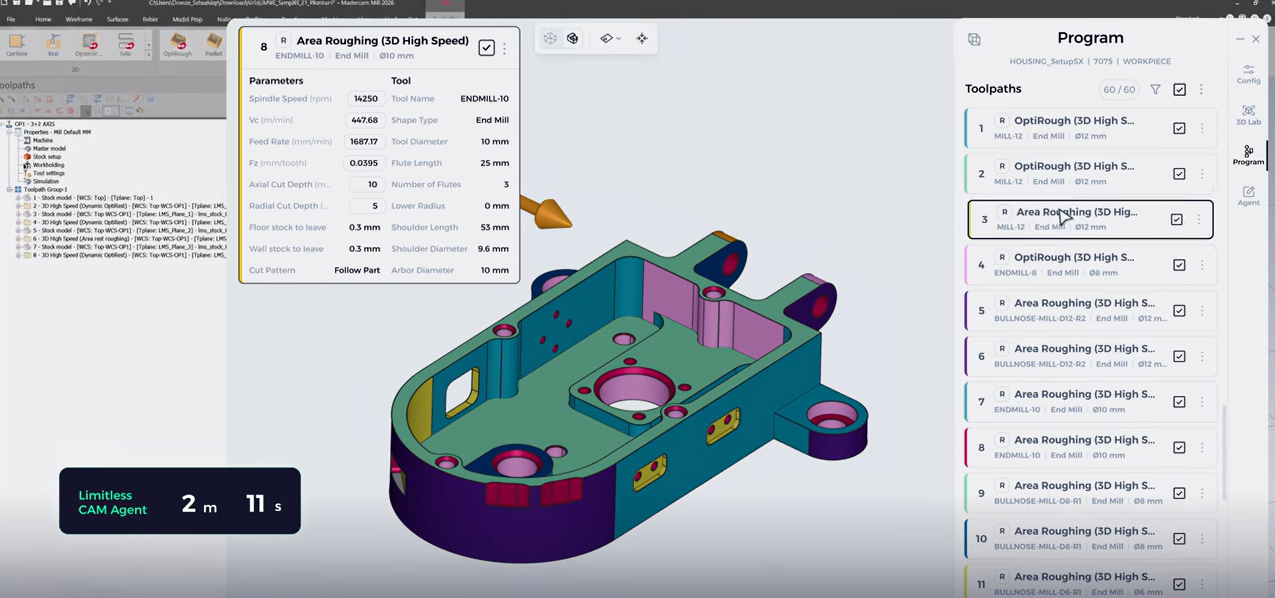
What about CNC? You mentioned testing 5-axis machining software.
Although the physics we are dealing with in additive is a lot more complex, I think the most difficult part of CAM for AI to solve is really the strategy. What tool for what surface, in what sequence. That has nothing to do with physics. The only way to solve that is you need a huge amount of expert data, which of course they never share with you.
Every company that wants to build this technology for machining ends up buying their own machines and selling them after because it is a nightmare to operate those. I think it is a reinforcement learning problem. It is a more sophisticated problem, so it will take a little more time.
What needs to change to see wider adoption of 3D printing?
When I look at progress in manufacturing technology historically, it is always associated with a pull in demand. Take composites. Without the A380 from Airbus or the Dreamliner, the composite industry was not going to grow as much. What we need in Europe is not people like us who know how to build technology. We need big ambitious programs. Every country in Europe needs to have a big program. AM may benefit from the defense spend and the ambition to rebuild our defense. Unfortunately it is defense, we would have loved it to be something else, but it is what it is.
Any other interesting AI companies in manufacturing you would highlight?
I really like what the EMMI AI guys did. They built AI for injection molding. Injection molding is really used at scale, it is a massive industry, and it is complex.
Related Topics
 Javier López Picazo
 François.B
 1
1
 Uliana Krayneva
0
Uliana Krayneva
0



Comment(0)