

 Europe
  Türkiye
  United Kingdom
  Global







 Login with my Xometry account

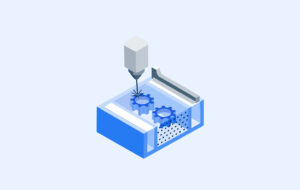
3D Printing Process Overview: Metal Binder Jetting
What Is Metal Binder Jetting? How Does It Work?
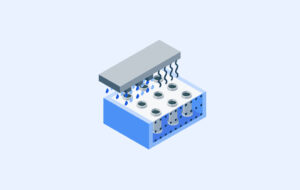
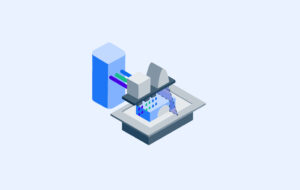
Metal Binder Jetting (MBJ) is a multi-stage 3D printing process that produces metal parts by binding metal powder particles with a liquid binder. Unlike DMLS, MBJ creates parts without melting the metal powder during printing. This process can produce composite metals, such as 60% stainless steel and 40% bronze, or single-alloy metals. Its ability to nest many parts within a build makes it a cost-effective alternative to traditional methods like metal injection molding, die casting, and investment casting.
Stage 1: Building “Green” Parts
The process begins by printing 0.1 mm (0.004″) layers, with binder precisely deposited onto metal powder to form the part layer by layer. The resulting “green” parts are fragile and require careful handling as the loose powder is removed.
Stage 2: Post-Processing
- Bronze-Infiltrated Composite Metals: Green parts are placed in a furnace where bronze replaces the binder, fusing the powder into a durable composite. These parts require a sacrificial wick to be generated on the part to infiltrate the bronze. The wick is removed after the furnace step. Finished parts have a matte grey to bronze finish, with optional post-processing for a refined look. During the furnace step the parts shrink slightly.
- Single-Alloy Metals: Some metals can be fully sintered without a bronze infiltration step through a de-binding and furnace process, but experience significant shrinkage. They feature a matte finish with a metallic sheen and can be post-processed for improved surface quality.
Design Freedom
Binder jet metal parts do not require support structures, which may allow for more design flexibility compared to other 3D printing processes. It is important to note, however, that features like channels and gaps must be made to allow material clearing without excessive force. Any leftover material inside channels or narrow features will become solid metal after the furnace stage. Shrink factors are always a concern with binder jet metal parts and often multiple prototypes or design iterations may be required to tune a feature set for production.
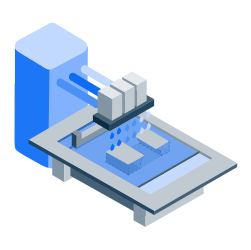 MBJ
MBJ
Metal Binder Jetting
Advantages
|
Disadvantages
|



 0
0
Comment(0)