

 Europe
  Türkiye
  United Kingdom
  Global









 Login with my Xometry account

3D Printing Process Overview: SLA
What Is SLA? How Does It Work?
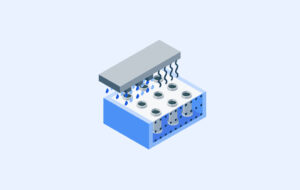
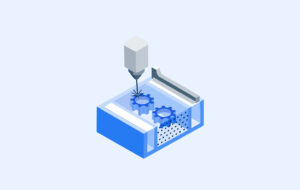
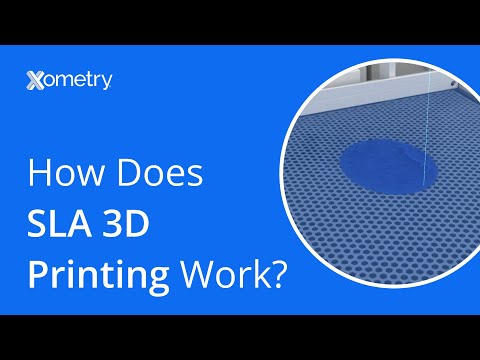
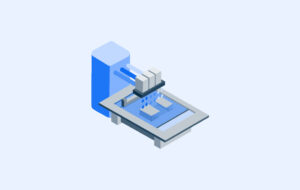
Stereolithography (SLA) is a 3D printing technology that uses photopolymerization to create models with high precision. This process involves an ultraviolet (UV) light curing liquid resin layer by layer, solidifying it into the desired shape. During the pre-build setup, structural supports are generated to stabilize the model during printing. Once the print is complete, these supports are manually removed, and the parts are washed in a solvent solution to eliminate any uncured resin. Finally, the parts undergo a post-curing process in a UV light oven to achieve full strength and stability.
SLA typically produces a smoother surface finish compared to other 3D printing processes, such as FDM. This is because SLA solidifies liquid resin using a laser, rather than melting and cooling a plastic filament. The result is parts with a smooth, almost glass-like finish.
 SLA
SLA
Stereolithography
Advantages
|
Disadvantages
|



 0
0
Comment(0)