

 Europe
  Türkiye
  United Kingdom
  Global








 Login with my Xometry account
 Robust actuator-to-brake pedal joint for angled, high-force actuation
f
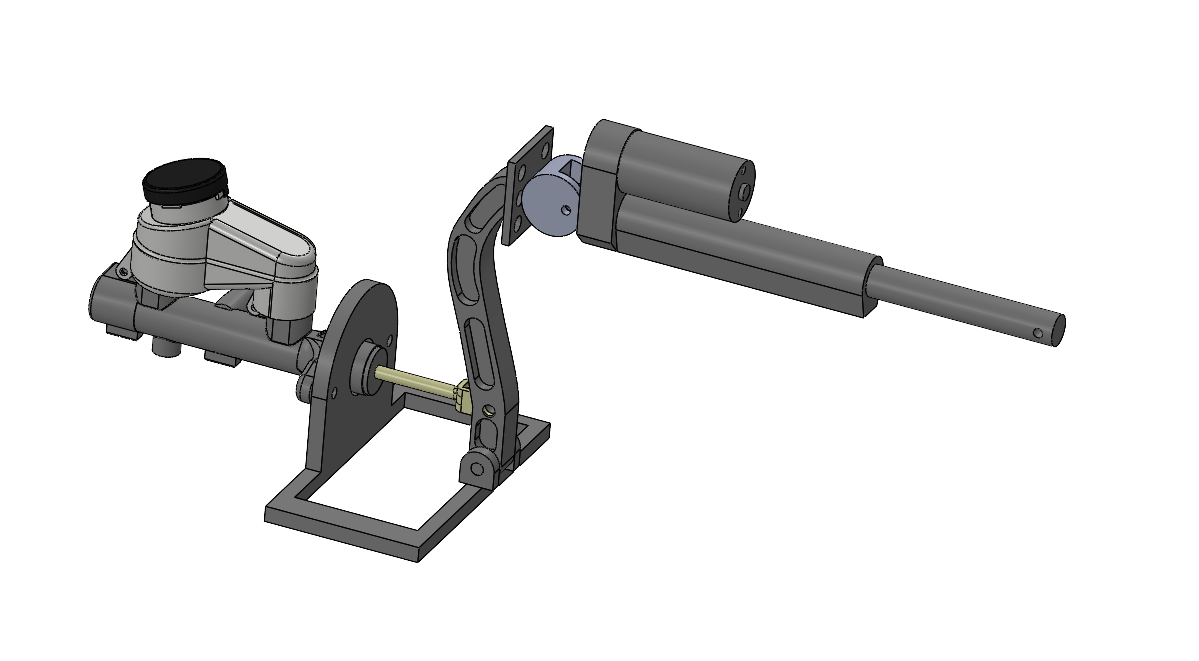
Hi, i am designing a push-rod connection between a linear actuator and a vehicle brake pedal for a durability test setup. The actuator can apply 750 N, and the pedal rotates through its travel, so the actuator rod sees angular misalignment and dynamic loads. I’m looking to allow this angular change without overloading/wearing the actuator. For high-force pedal actuation like this, what joint or linkage approach works reliably?


Suggested Topics
Topic
Replies
Views
Activity
Teeth shearing off, what is the best material?
Hello, we have this small tool used to loosen/tighten a metal slotted ferrule. The teeth of the tool engage with the slots in the ends of the ferrule and torque is applied to tighten... read more

1
677
Jun 26
DFM check: Is this part a “nightmare” to machine?
Hi! Designing a custom housing for a prototype. I’ve got features on all six sides, and I’m realizing this is going to need a ton of CNC setups. In your experience, is it better... read more

2
1.0k
Apr 05
Shrink-fitting a thin stainless sleeve into a thick steel housing
Hi! I’m working on a shrink-fit joint where a thin-walled 304 stainless sleeve is installed into a bored pocket in a much larger 4140 steel housing. The sleeve carries only light axial loads, but... read more
1
1.0k
Dec 29
DMLS tolerances for screw holes and sealing surfaces
Hi, I’m working on a small metal housing (around 120 × 80 × 40 mm) that will be 3D printed with DMLS for a sensor module. It needs threaded M3 screw holes and a... read more
2
2.3k
Nov 25
Compact linear slide – how to balance smooth travel with lateral stability
Hi! I’m working on a compact linear slide mechanism for a handheld inspection tool. The carriage rides between two vertical guide rails and has to remain laterally constrained while still moving smoothly along the... read more
1
1.3k
Oct 15