

 Europe
  Türkiye
  United Kingdom
  Global









 Login with my Xometry account
 Robust actuator-to-brake pedal joint for angled, high-force actuation
f
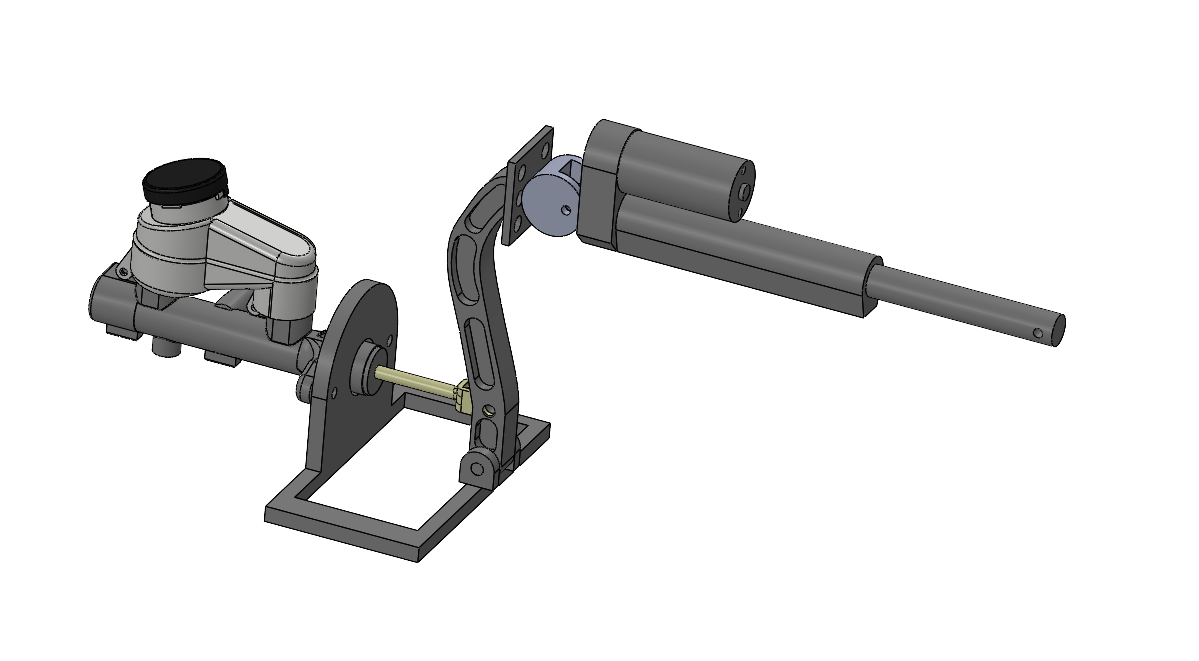
Hi, i am designing a push-rod connection between a linear actuator and a vehicle brake pedal for a durability test setup. The actuator can apply 750 N, and the pedal rotates through its travel, so the actuator rod sees angular misalignment and dynamic loads. I’m looking to allow this angular change without overloading/wearing the actuator. For high-force pedal actuation like this, what joint or linkage approach works reliably?


Suggested Topics
Topic
Replies
Views
Activity
DFM check: Is this part a “nightmare” to machine?
Hi! Designing a custom housing for a prototype. I’ve got features on all six sides, and I’m realizing this is going to need a ton of CNC setups. In your experience, is it better... read more

2
730
Apr 05
Flatness GD&T for 6061 plates
For a mounting plate for a precision sensor (about 200 mm × 200 mm) I was going to call out a flatness of 0.05 mm, but my senior engineer says that’s overkill and will double the machining... read more
3
2.3k
Mar 14
ISO 2768-mK vs specific tolerances
Hey guys, I’m getting some pushback from our shop lead. I’ve been dimensioning every single feature on a new manifold block because I’m paranoid about fitment, but he says the drawing is "unreadable" and... read more
2
2.4k
Mar 14
Thermal expansion modelling for a braced rectangular steel tank
hi, for a welded steel coolant reservoir for a test stand - 4 m × 2 m × 1.5 m with internal bracing I need to account for thermal expansion. Fluid runs at 80–90... read more
2
2.2k
Feb 04
Designing holes for M3 threaded inserts in an ABS enclosure
Hi! In my design for a small ABS enclosure for an onboard sensor module I want to switch from molded bosses to heat-set M3 inserts for the lid screws. Before I finalize CAD, what... read more
1
1.3k
Dec 23