

 Europe
 Türkiye
 United Kingdom
 Global


 Login with my Xometry account




We had a chat with Peggy Xia, co-founder and CEO of gNucleus, to talk about why a general-purpose model stops lacks to be truly useful, what a hundred agents got done in two hours, and why she thinks the CAD industry stopped innovating a long time ago.
From CAD to YouTube to CAD
Peggy, your career starts inside a CAD kernel, takes a tour on the YouTube recommendation team and then circles back to CAD. How does that happen?
My first job was at the Siemens Shanghai development centre, working on NX. I was the first person working on synchronous modelling, which is what lets you edit geometry directly, move a face or defeature a part, without going back through the feature tree. After that I spent a couple of years sitting in the General Motors office in Shanghai, working on Teamcenter and NX, which is where I learned how a big enterprise actually uses CAD and PLM. Then I moved to the United States, to MSC Software, the company that commercialised NASTRAN after it came out of NASA. I stayed on geometry and meshing, and worked on generative design, although back then everybody called it topology optimisation.
Around 2018 machine learning started to get popular, and there is a lot in common underneath. Most of the solvers we deal with in FEA use gradient descent, which is also fundamental to AI. From the maths side I did not see a big difference, but machine learning looked more interesting, so I changed careers. My first job in it was at Amazon, and then Google, on YouTube recommendations, where my job for six years was building the recommendation models used by 2B+ users daily.
So you are one of the people responsible for the rest of us spending our free time glued to our phones.
Recommendation, search and ads were the three big machine learning applications in production at the time. What surprises people is that a lot of us did not watch much YouTube, because we were busy improving it.
What pulled you back out of it?
At YouTube we worked closely with Google Brain. In 2022 a team then called LaMDA, which later became the Gemini team, showed us an early version and I was shocked. All of our previous models were trained for one specific task. In a recommendation system you might combine a hundred small machine learning systems. LaMDA was multitask in one single model.
LaMDA was given a third-grade maths problem and failed. It was then given a longer prompt with an example inside it, and it succeeded. Until then you could not improve a model without data, and here it was just more context. I talked to Mei, my co-founder, and we decided that was what we wanted to work on.
Five Years and a Thousand Engineers for a Car
What is the problem you set out to solve?
The product development cycle in engineering is very long and very repetitive. For a car, you are looking at one to five years and a thousand engineers or more working on design, simulation, manufacture, etc.
Inside every iteration the work is manual and fragmented. In design you build a CAD model for manufacturing, then a second, simpler one for simulation, and you go back and forth modifying both. On top of that, the big enterprises have strict data requirements, so almost all of it happens inside their own isolated environment. We are looking to speed up the process with vertically aligned AI that can work through any stage of the project.
What can AI actually take out of that loop?
The repeated work, and the work that depends on individual human experts. Half the time goes on design and half on simulation. They come up with a design, simulation tests whether it works, and if anything is wrong they do more design iterations.
When you do a design you need to know whether it will work in simulation, and whether it can be manufactured at all. To simplify the argument, the design team only has its own knowledge. They only learn about the angle not being sufficient for injection molding once the manufacturing engineer tells them. And now they have to get back to modifying from the starting point. We collect that knowledge to make it accessible to anyone working on the project.
Only a Customized Model Offers True Value in Engineering
In simple terms, what does gNucleus do?
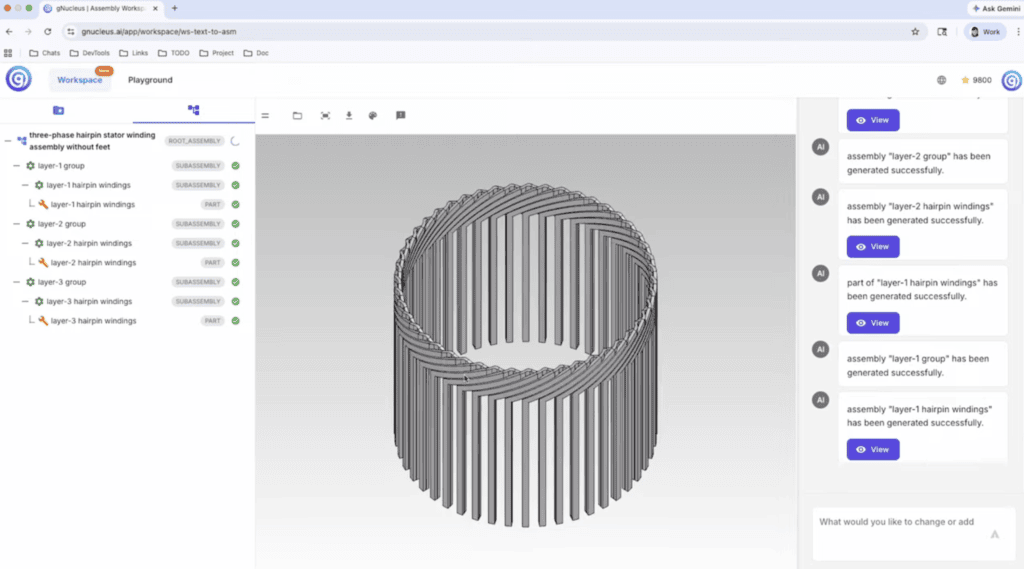
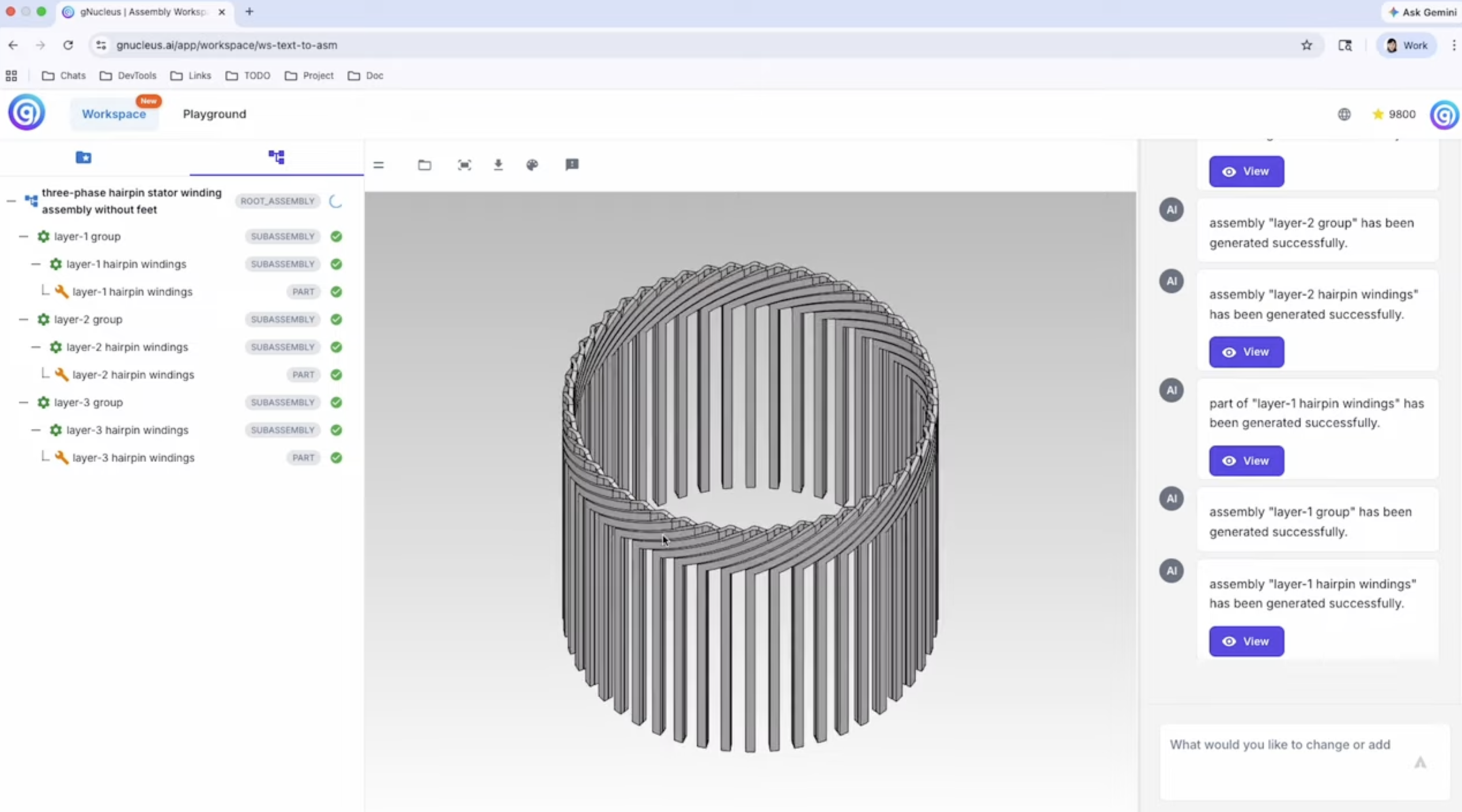
We are building a full stack engineering AI platform that lets an enterprise train their own knowledge into a model and generate CAD and workflows from their own data, with the main focus currently being on model iterations that sit between design and simulation stages. Full stack means we collect the data, we train the model, and we deploy it inside the customer’s own environment.
I contact you to implement AI at my engineering company. What am I actually getting?
A customized solution and workflow for that one enterprise. We think general-purpose AI will not work in this space, because the model accuracy is 100% dependent on data. You see fancy demos from the frontier models, and to do that they must have been trained on a lot of CAD data.
But if a frontier model, or any model, has never seen that data, it will underperform on it and make mistakes. In design and manufacturing, a 1% error rate is already unacceptable in most cases. Until enterprises are willing to hand all of their proprietary data to the frontier labs for training, or until AGI arrives, that gap will always be there.
That is the gap we fill. We take the data, fine-tune our model on it, and the enterprise uses that model inside their own environment.
Give me a real example.

We have a lot of automotive customers. Say they are developing the next generation of a car, V2. They will very rarely build from scratch, they iterate on V1, so we take their V1 data and train a model that generates variants on it.
In production they do not change things drastically, but one change can trigger a lot of downstream modification, and those constraints are knowledge only the engineers inside that corporation have. We extract that and fine-tune the model with it. Then they can call our model to generate models in CATIA, NX or Creo.
Does it mean you have to train a separate model for each of CATIA, NX and Creo?
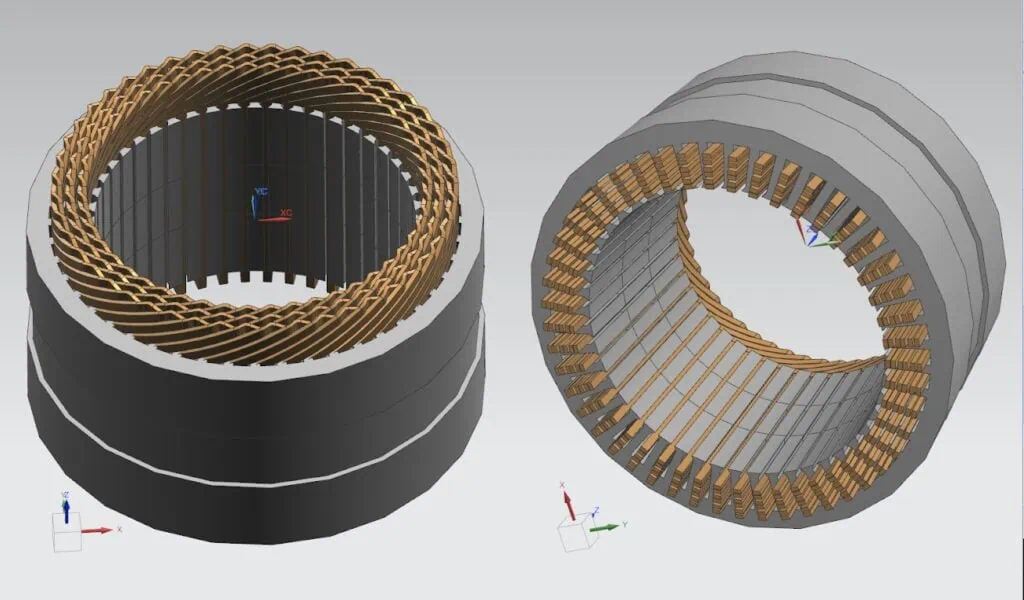
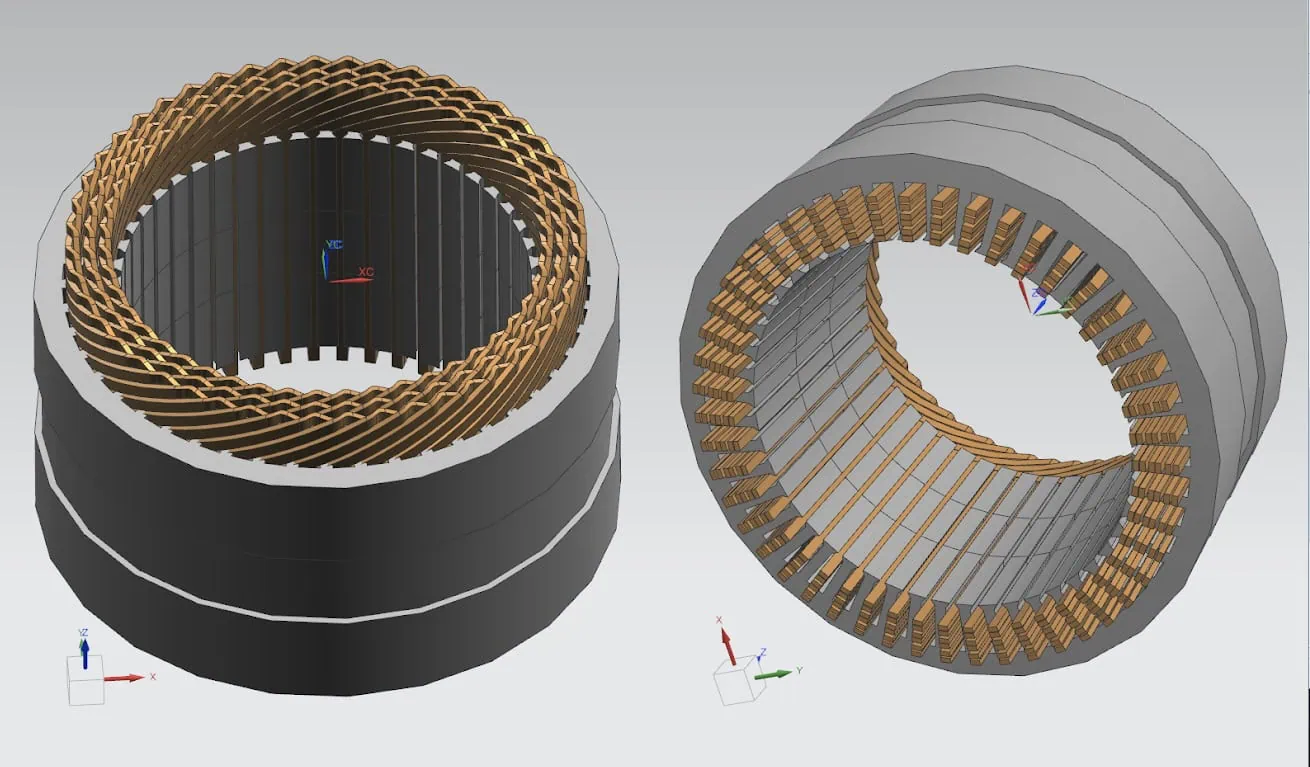
No. The model generates into one single representation of our own, and we decode that into whichever native format the customer runs. So the model learns geometry once instead of learning every CAD system’s file format separately. We already support the three I just mentioned, plus SolidWorks and Onshape, and open source ones like FreeCAD.
Can you explain the role of agents in this solution?
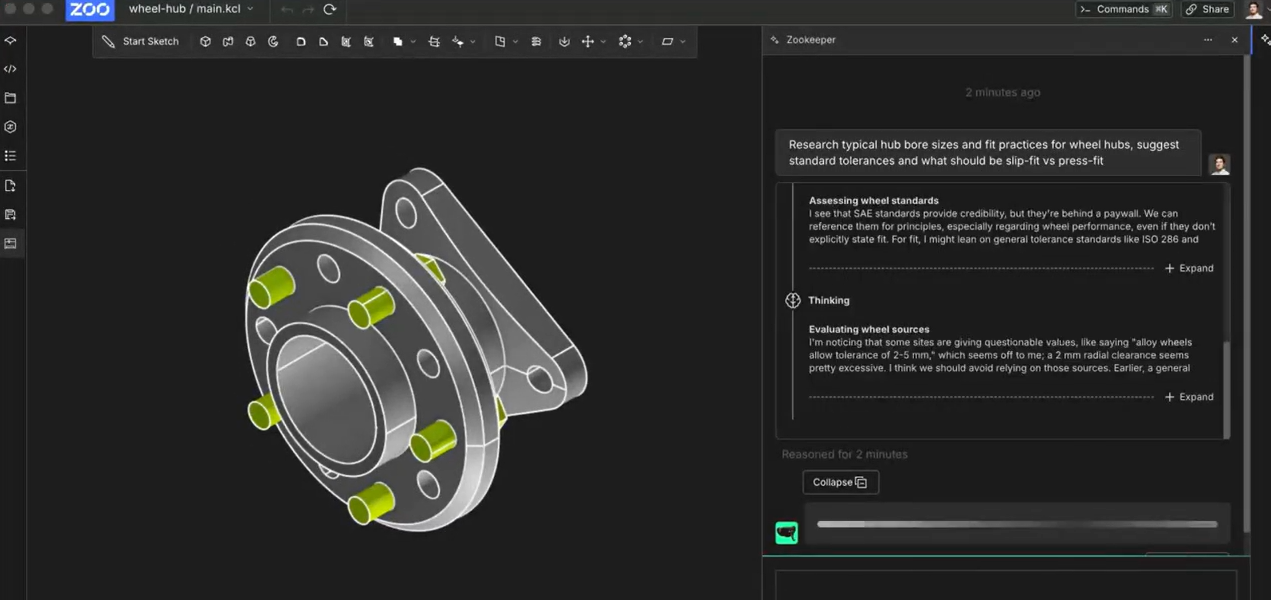
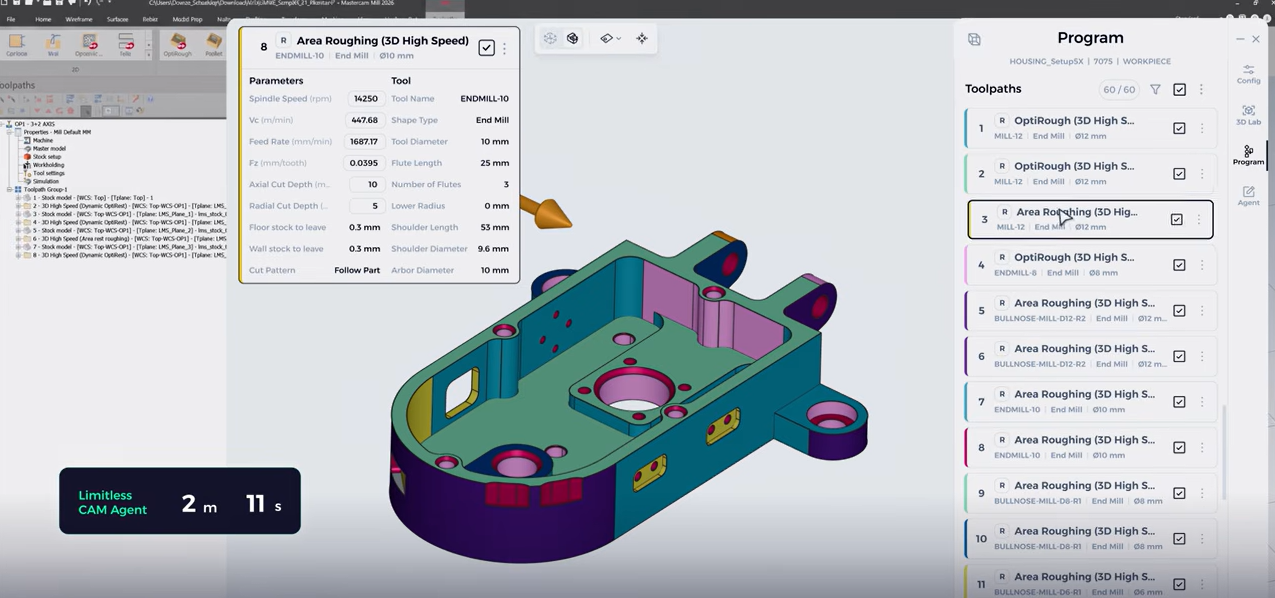
You cannot use a raw model, that is just a serving endpoint with API calls. You need to build it into an application the user interacts with, and that layer is mostly agents. Our agent talks to our model, which performs better than an agent talking straight to a general-purpose model. And it is not one single model, it is a model family. Also, the agents are able to communicate with other parts of the customer’s tech stack.
You worked at Siemens. Why does this have to come from a small company?
Because I have seen firsthand how hard it is for a large corporation to move quickly. Processes accumulate. Someone adds a step, it becomes part of the system, and very few people have the incentive to remove it. Eventually even simple things become slow and complicated.
That is one of the core beliefs behind Silicon Valley, that breakthroughs come from small focused teams that can move fast and rethink things from first principles, rather than from large organisations optimised around an existing business.
The other reason is that CAD has been a mature technology for a long time, so there has been no pressure to move fast. The core experience today is not fundamentally different from when I started my first job. Synchronous modelling was one meaningful innovation, implicit modelling was another, but the pace of fundamental change has been limited. Companies move fastest when the underlying technology is still immature and changing quickly, the way AI is now. In a market as stable as CAD, there has been little incentive to rethink the product from the ground up.
Made for Companies with 200+ Engineers
What kind of company is the best fit for using you?
Large manufacturing enterprises, car companies and motor companies, around two hundred engineers and up. They have more need for fine-tuning, and AI improves their efficiency far more than it improves an individual designer’s.
We focus on the iteration between design and simulation. In the recommendation world we call the big ones head users and the small ones tail users. Right now we are focused on the head users.
How many customers do you have, and where are they?
I cannot expose the exact number, but we work with a lot of big names in this space, and I would say less than a hundred paying customers. We have customers globally, in Europe, the US and China. We focus mostly on the US and Europe, as both are facing a problem of insufficient engineers.
Can you quantify the data you need before fine-tuning is worth it?
It depends on your goal and on the evaluation set you are building. If you only want to be good at one thing, say generating the bumpers of a car, around a hundred is normally good enough. If you want a larger part of the car you keep adding categories. But if you want to improve bumpers and you give other types of data, you will never see that happen.
What’s the biggest win for your customers?
Once we train on all of their data, an assembly level or a larger component level CAD generation can be done within two hours. In the past they might have had 30-50 engineers generating the parts and assembling them together. Now we start agents on the cloud, effectively unlimited, say a hundred of them. Fifty people for at least one week, against a fine-tuned model in two hours. That’s a massive win.
So are those 30-50 people out of a job?
Not necessarily. They can build more. There is already a shortage of engineering talent in both the United States and Europe, while many Asian industrial companies are able to iterate products much faster. In industries like EVs, that difference in iteration speed can become a major competitive advantage.
So the question is how Western engineering teams expand their capacity and move faster. AI agents and fine-tuned engineering models can do that for an existing team. They automate the repetitive work, run design and simulation workflows continuously, and let engineers evaluate many more alternatives in parallel. The goal is not to replace engineers, it is to give the same team more capacity.
What does that do to a junior engineer?
AI is letting people do the more creative, more design-led work. For a junior engineer to do a senior engineer’s work normally takes a very long time. With AI, the knowledge is already there, you are standing on the shoulders of a giant almost, so they can ramp up much faster.
Starting with Automotive, Followed by Robotics and Others
What does the platform look like in a few years?
We will expand into manufacturing and systems engineering. On the vertical side we mostly focus on automotive now, we are starting on robotics, and more will follow. Our goal is to bridge the gap for enterprise proprietary needs.
What is the industry overestimating about AI in engineering, and what is it underestimating?
In any team you have the early adopters, the normal users and the laggards. The early adopters are very few and they get excited about every demo, and there are people who underestimate it until everyone else is using it. But there is a point where maybe thirty percent think it can be used reliably in their daily work, and that is product-market fit. You can see that pattern very clearly in AI coding. In engineering we are not there yet.
One overestimation, in our particular engineering vertical, is precision. People say they put something into a general-purpose AI and got a CAD model that looks like a car engine. But it is not production at all. Precision is what the early adopters miss, and what the general public cannot see.
There is a discussion that the general-purpose model will eventually do everything without fine-tuning. Maybe that time comes, maybe it never does. That is the big bet we have, and our bet is that data is still the key. If the other one arrives, that is AGI time, and then we do not need to do fine-tuning for each customer, the AGI models will figure out how to find data and train a model by itself.
What would have to happen for the bet on proprietary data to be wrong?
I do see the potential in the next generation of AI. There are research labs in Silicon Valley now, like the Discovery Loop which Jeff Dean recently built an AI model that can learn and do research by itself. Today we create the dataset and feed the data to the AI and the AI improves. But if they can train an AI that identifies the problem and finds the data it needs to improve itself, that is AGI time, and it crosses the boundary of access to proprietary data.
Related Topics
 Uliana Krayneva
 0
2



Comment(0)