

 Europe
  Türkiye
  United Kingdom
  Global







 Login with my Xometry account

3D Printing Process Overview: Carbon DLS®
What Is Carbon DLS? How Does It Work?
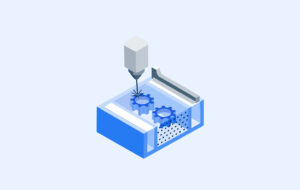
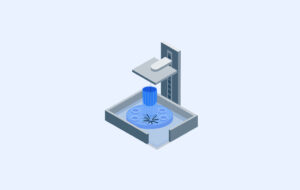
Carbon Digital Light Synthesis® (Carbon DLS®) is a 3D printing technology that uses digital light projection, oxygen-permeable optics, and programmable liquid resins to produce products with end-use durability, resolution, and surface finish. Unlike other methods it employs a unique process called Continuous Liquid Interface Production (CLIP) to create parts.
The process begins with a pool of liquid resin. A UV light projector shines patterns through an oxygen-permeable window onto the resin, solidifying it layer by layer. Unlike conventional layer-by-layer methods, CLIP maintains a consistent flow of liquid resin beneath the curing zone, enabling a continuous and seamless build process. This gives the parts isotropic properties, meaning that strength is even regardless of orientation.
After printing, parts undergo a thermal curing step to enhance their strength, durability, and thermal stability, resulting in production-ready components.
 Carbon DLS
Carbon DLS™
Advantages
|
Disadvantages
|



 0
0
Comment(0)