

 Europe
  Türkiye
  United Kingdom
  Global








 Login with my Xometry account

3D Printing Process Overview: FDM
What Is FDM? How Does It Work?
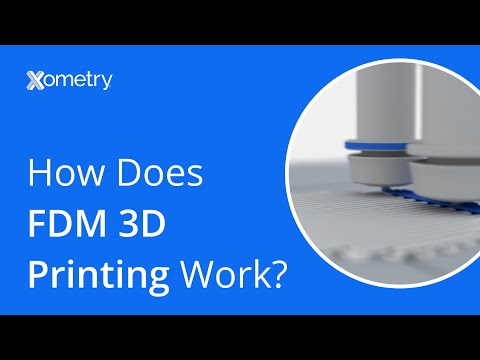
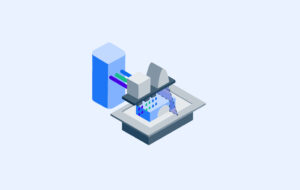
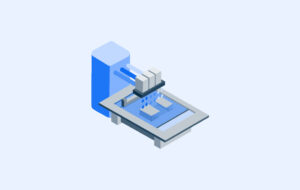
Fused Deposition Modeling (FDM) is an extrusion-based technology, where plastic filament is selectively deposited on the build area to create a part. Parts are very rigid, especially compared to Selective Laser Sintering (SLS), which makes them a great fit for projects with a rigidity requirement. FDM is widely used in different industries because of the various materials that it supports. These materials range from commonly utilized thermoplastics like ABS, polycarbonate, and nylon to specialty-engineered plastics such as ULTEM.
Given that the typical layer height of industrial FDM is 0.254mm (0.010”) and the extruded material is relatively coarse compared to other processes, fine features may not fully resolve. Knowing this, it is important to follow the guidelines outlined in this guide to ensure all features are produced as intended.
FDM also requires support structures (soluble or break-away) for certain features, so it is important to keep this in consideration when designing parts to allow support structures to be removed during post processing.
 FDM
FDM
Fused Deposition Modeling
Advantages
|
Disadvantages
|



 0
0
Comment(0)