

 Europe
  Türkiye
  United Kingdom
  Global





 Login with my Xometry account

3D Printing Process Overview: MJF
What Is MJF? How Does It Work?
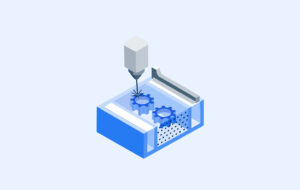
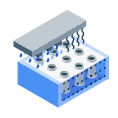
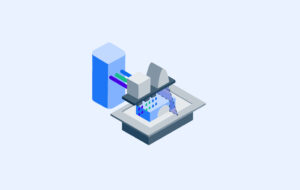
HP Multi Jet Fusion (MJF) is a powder bed fusion technology that produces high-quality plastic parts. Unlike other powder-based methods, MJF utilizes fusing and detailing agents to precisely control part geometry, with heat applied to create a solid, detailed structure.
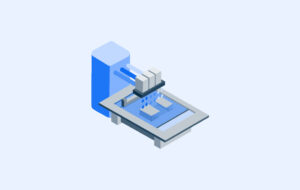
The process begins by spreading a thin layer of thermoplastic powder across the build area, followed by the inkjet head depositing agents that help selectively fuse particles and ensure sharp edges and intricate details. This unique approach delivers a consistent and reliable layer-by-layer build, making MJF distinct from traditional methods like Selective Laser Sintering (SLS) or Direct Metal Laser Sintering (DMLS). These other techniques rely on single laser beams, leading to variable printing times per layer.
MJF is renowned for its efficiency and speed, capable of creating parts up to 10 times faster than some competing 3D printing technologies. Its ability to provide high-resolution details while maintaining rapid throughput makes it a popular choice for functional prototyping, low-volume production, and bridging to injection molding.
By offering even printing times per layer, MJF achieves an impressive balance of precision and speed, making it ideal for those looking to test part performance or produce small batches without significant upfront costs. This versatility positions MJF as a highly robust and flexible option in modern manufacturing.
 MJF
MJF
HP Multi Jet Fusion
Advantages
|
Disadvantages
|



 0
0
Comment(0)